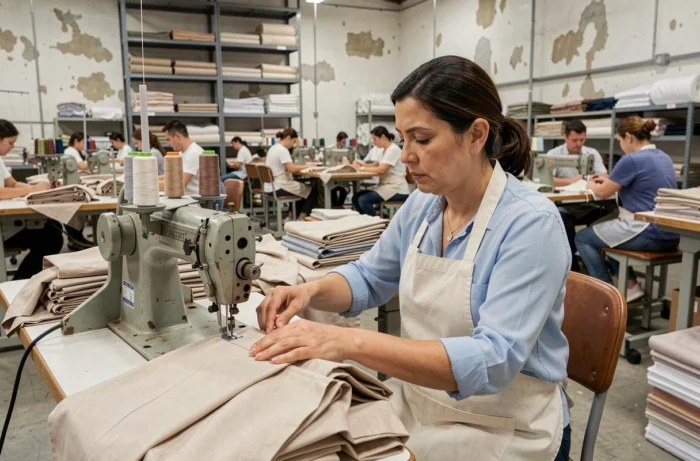
Zara has almost no textile factories of its own. The Spanish group Inditex, the parent company of the brand, relies on a network of over 1,700 direct suppliers spread across about fifty countries, mobilizing a total of more than 8,000 factories. This outsourced architecture, managed from Galicia, forms the foundation of a production model that the group protects through a culture of assumed secrecy.
Framework Agreement with IndustriALL: Transparency Under Conditions
A point rarely addressed in profiles dedicated to Zara concerns the mapping of its factories. The complete list of manufacturing sites exists, but it is not published. Inditex shares it only with the international trade union federation IndustriALL Global Union, as part of a long-standing framework agreement.
This arrangement allows IndustriALL to conduct checks on working conditions in the concerned factories. In return, the general public, independent NGOs, and journalists do not have access to detailed information on a factory-by-factory basis. The group communicates aggregated data (number of suppliers, number of countries), without going down to the level of each workshop.
To better understand the production of Zara clothing, it is necessary to cross-reference Inditex’s official statements with industrial databases and field surveys conducted by NGOs like EarthSight or investigative media.
Mega Textile Suppliers: Subcontractors Dressing Multiple Brands at Once
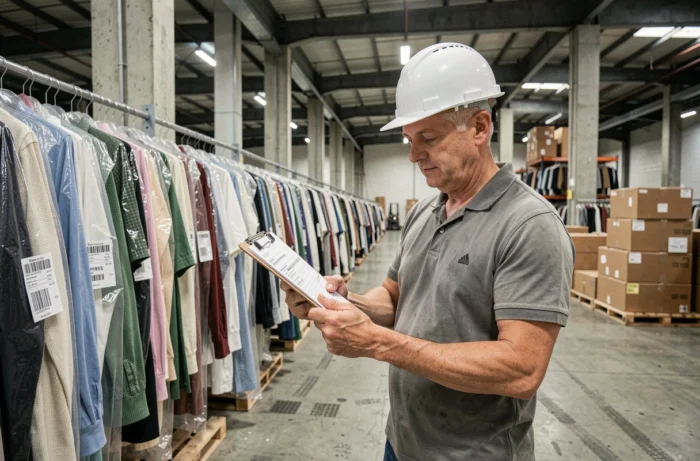
Zara does not work with thousands of small artisanal workshops. The model largely relies on large-capacity manufacturing platforms, capable of producing simultaneously for several fast fashion giants.
Among the names that appear in industrial databases:
- SiATEX, in Bangladesh, which produces for Zara but also for other international ready-to-wear brands.
- Eastman Exports, in India, an integrated textile group (from yarn to finished garment) working with several brands in the fast fashion segment.
- Zeriatex, located in Turkey and Poland, whose production capacities cover both denim and jersey.
This concentration on multi-brand mega-suppliers has a direct consequence: the same factories sew for Zara and its competitors. A Zara garment and a garment from a rival brand can come out of the same workshop, on the same production line, with differences limited to the pattern and labeling.
This pooling reduces unit costs and speeds up timelines, but it also dilutes responsibility. When a scandal erupts in a factory, several brands are involved, and each can point to the other.
Cotton and Deforestation in Brazil: The Raw Material Under Investigation
The issue does not stop at the garment factories. The British NGO EarthSight has traced the value chain of the cotton used in some Zara clothing, from the plantations of the Cerrado savanna in Brazil to European shelves.
The Cerrado, Brazil’s second-largest biome after the Amazon, is being rapidly converted into agricultural land. Cotton is grown there on an industrial scale, and part of this production ends up in Asian spinning mills that supply Inditex.
The regulatory problem is specific: cotton is not covered by European legislation on imported deforestation. This regulation targets soy, beef, palm oil, timber, cocoa, coffee, and rubber, but not textile fibers. Therefore, cotton escapes the traceability obligations imposed on European importers.
EarthSight has also shown that cotton certified as “sustainable” by recognized labels came from farms involved in deforestation. Certification does not guarantee the absence of environmental impact, raising questions about the reliability of the commitments made by brands.
Management from Galicia: The Nerve Center of Arteixo
The uniqueness of Inditex compared to other textile groups lies in the extreme centralization of its supply chain. The operational headquarters is located in Arteixo, a municipality in the suburbs of La Coruña, Galicia. The design teams, purchasing services, and the main logistics center are concentrated there.
This choice, maintained since the brand’s founding in 1975 by Amancio Ortega and Rosalia Mera, is not anecdotal. The physical proximity between creators, buyers, and logisticians allows for reducing the cycle between the design of a model and its arrival on the shelves to a few weeks, whereas the classic textile cycle counts in months.
The most responsive suppliers are located in Spain, Portugal, Turkey, and Morocco, just a few days’ transport from the Galician hub. Lower turnover productions (basics, simple pieces) are sent to Asia, where labor costs remain lower. This dual circuit, geographically segmented according to the speed of collection renewal, is the central mechanism of Inditex’s fast fashion model.
The European market represents the dominant share of Zara’s revenue. Logistics from Galicia, supported by a dedicated road and air network, supplies several thousand stores worldwide with frequent restocks.
What distinguishes Zara from its competitors is therefore neither the price of fabrics nor the cost of labor, but the speed of execution and the locking of information. The group manufactures little itself, massively outsources, shares its supplier data with only one union interlocutor, and maintains a level of confidentiality that complicates any exhaustive independent verification.