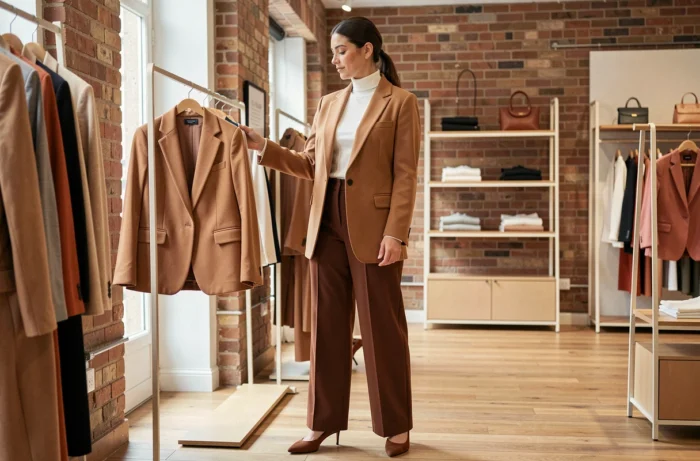
The spring-summer 2026 fashion shows have delivered their verdicts, the back-to-school displays are starting to turn, and the season’s wardrobe is taking shape with an unusual clarity. Two main trends coexist: structured silhouettes, almost architectural, and a purchasing reflex that increasingly favors clothing already worn by someone else.
This season’s fashion trends are not limited to a color palette or a style of jeans. They reflect a relationship with style that is undergoing significant change.
Second-hand and fashion trends: the reflex that redistributes the codes
Discussing the key pieces of the season without mentioning how they are purchased is like describing a dish without mentioning its ingredients. According to a Vinted survey reported by FashionUnited, 88% of respondents check the second-hand offerings before buying new. This figure is based on around 25,000 respondents, giving it a statistical weight that is hard to ignore.
The French Institute of Fashion confirms the trend on the French side: more than 11% of clothing purchased in France is now second-hand. Vinted, for its part, announced a volume of exchanged products reaching 10.8 billion euros by 2025, up 47% year-on-year. The platform has reportedly become the leading clothing seller in France, ahead of Shein and Decathlon.
In practice, runway trends (lavender, barrel cuts, aviator jackets) appear on these platforms a few weeks after their debut in stores. Searching for trendy pieces in pre-loved rather than new sections has become a commonplace gesture, not a militant one. Field reports diverge on this point: some buyers see it as a purely economic choice, while others view it as an environmental approach. Both motivations coexist without a clear hierarchy of importance.
Fashion enthusiasts who follow these developments throughout the seasons will find complementary analyses on the fashion section of News Quirk, particularly regarding the relationship between runways and real wardrobes.
Lavender and glacier blue palette: the fashion colors dominating the season
After several seasons where neutral tones (beige, ecru, light gray) saturated wardrobes, color is making a comeback with two specific shades. Lavender is settling on flowing dresses, satin shorts, and accessories. Glacier blue, cooler and more graphic, is appearing on coats, sweaters, and even in makeup.
These two colors share a characteristic: they do not require any particular style effort. Lavender works well in a monochrome look or as a unique touch on a dark ensemble. Glacier blue replaces navy blue without its rigidity.
The interest in these shades goes beyond aesthetics. They are identifiable enough to be searched by name on resale platforms, making the hunt for second-hand pieces easier. Typing “lavender dress” or “glacier blue sweater” yields usable results, unlike vague descriptions like “soft pastel.”
Materials and cuts for the season: leather, denim, and enveloping volumes
This season’s material trio consists of denim, smooth leather, and suede. All three come in sober and natural shades, with some occasional bursts of color.
The barrel jean, the star cut of the season
The barrel cut (wide leg, tapered at the ankle) is establishing itself as the reference denim silhouette for autumn 2026. It is gradually replacing the wide leg, which is seen as less structured. The barrel jean redefines the bust-leg proportion and works well with both sneakers and heeled ankle boots.
Leather and suede: the return of the aviator wardrobe
Aviator-inspired jackets are making a comeback with a premium finish. Thick leather, sheepskin collar, visible seams: the military style reimagined in a luxury version crosses all wardrobes, both female and male. Suede, long confined to accessories, is moving up to jackets and mid-length skirts.
One point deserves attention: these materials raise questions about sustainability at the time of purchase. A genuine leather aviator jacket represents an investment. Searching for it second-hand divides the budget without sacrificing quality, provided that the condition of the seams and the suppleness of the leather are checked.
- Barrel denim: prioritize a rigid fabric that maintains the cut over time, rather than stretch denim that distorts after a few washes.
- Smooth leather: check the consistency of the dye and the absence of cracks at the folds, especially on second-hand pieces.
- Suede: treat preventively with an appropriate water repellent, as untreated suede marks from the first rain.

European textile regulation: what changes for consumers in 2026
Fashion trends do not emerge in a regulatory vacuum. The European Union is accelerating the implementation of extended producer responsibility (EPR) for the textile sector. Several member countries, including Italy, already require foreign producers selling in their territory to comply with these new obligations.
The recent revision of the framework directive on waste specifically targets textiles. The stated goal: to close the loop of the fashion supply chain in Europe, from thread to post-use collection. For consumers, the concrete effects remain to be clarified. The available data does not allow for conclusions about the immediate impact in terms of prices or in-store offerings.
What is emerging, however, is that brands will have to finance the collection and recycling of their products sold in Europe. This could mechanically enhance second-hand circuits, as every reused garment reduces the end-of-life treatment cost for the producer.
- The textile EPR will be gradually applied in member states, with variable timelines depending on the countries.
- Non-EU brands selling online in the European market will also be affected.
- The digital product passport, currently being deployed, will allow tracking each garment from its production to its recycling.
Adopting a stylish look this season involves both the choice of pieces and an awareness of their life cycle. Lavender and the barrel jean will remain in the visual memories of autumn 2026. The real novelty, less photogenic, lies in how these garments circulate, are resold, and soon, recycled under regulatory constraints.