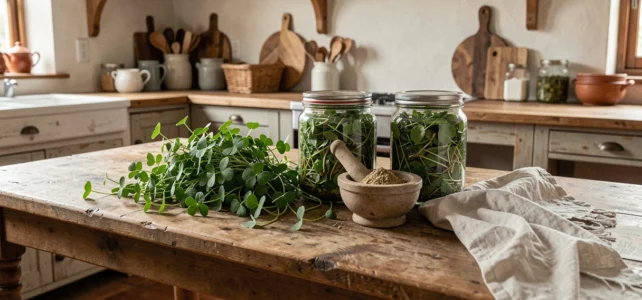
Purslane deteriorates within one to two days in the refrigerator. Its water-filled stems soften quickly, and most gardeners who harvest it in summer end up losing some. To keep purslane fresh all winter, you need to act right after harvesting with methods suited to this delicate plant.
Here are six practical techniques, from drying to sowing under cover, to enjoy your leaves well beyond the warm season.
1. Low-temperature drying to obtain a long-lasting powder
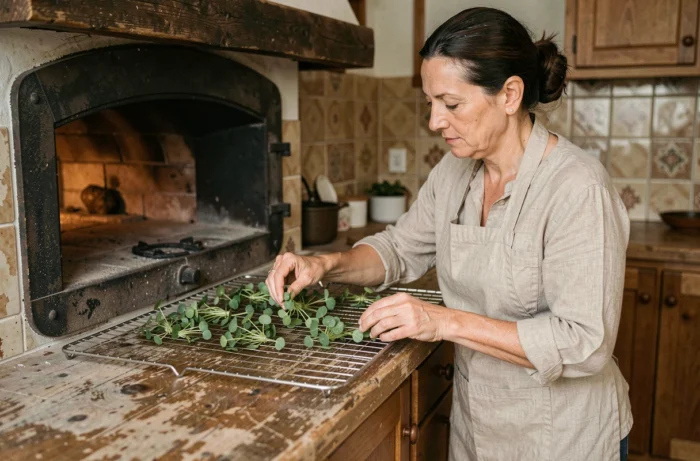
Purslane contains a lot of water. Drying it requires more patience than with thyme or rosemary. The principle remains simple: eliminate all moisture to stop degradation.
Spread the leaves in a single layer on a rack, in a dry and ventilated place. If you are using a dehydrator, set it to a low temperature to avoid cooking the leaves. Drying in an oven slightly ajar also works, as long as you monitor regularly.
Once the leaves are completely dry and brittle, grind them into a powder and store in an airtight jar. This powder can be used in soups, dressings, or sprinkled on a salad. It keeps for several months away from light. Among the tips for preserving purslane, drying takes up the least space in a cupboard.
2. Freezing after quick blanching of the leaves
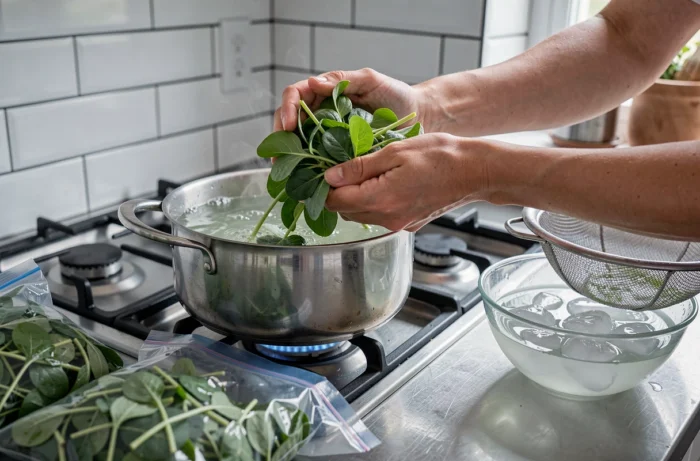
Freezing raw purslane yields disappointing results. The leaves become mushy and lose their texture once thawed. Quick blanching changes the game.
Dip the washed leaves in boiling water for a few seconds, then immediately transfer them to an ice water bath. This thermal shock stops the cooking and preserves the color. Drain thoroughly, then divide into portions in freezer bags, squeezing out the air.
Blanched and then frozen purslane can go directly into a soup or velouté without prior thawing. Don’t expect to eat it in a salad after freezing: the texture won’t be suitable.
3. Lacto-fermentation in a jar for preservation without a freezer
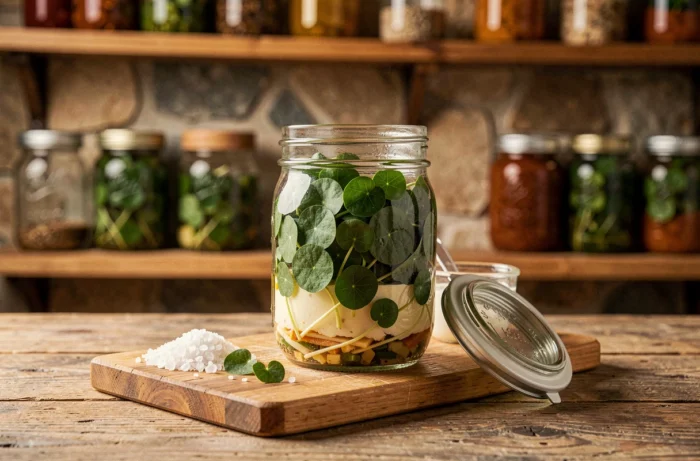
Lacto-fermentation is an ancient method that requires neither electricity nor vinegar. It relies on salt and the lactic bacteria naturally present on the leaves.
Prepare a brine with non-chlorinated water and salt (about one tablespoon per half-liter). Pack the purslane leaves and stems tightly in a clean jar, cover with brine, then seal. The purslane must remain submerged.
- Let it ferment at room temperature for a few days, then place the jar in a cool place (cellar or refrigerator).
- Check for bubbles appearing in the first few days: this is a sign that fermentation is active.
- The taste becomes slightly tangy, similar to pickles, which works well as an accompaniment to charcuterie or cheese.
The preservation lasts several months in a sealed jar, as long as the leaves remain under the brine.
4. Vinegar preservation for a ready-to-use condiment
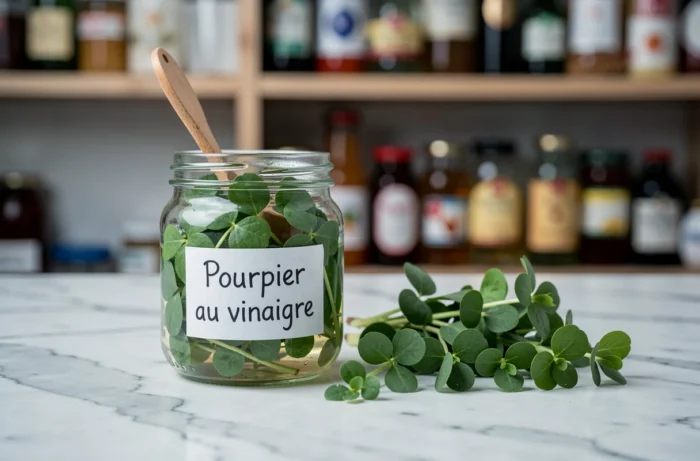
Have you ever noticed that capers are preserved in vinegar? The same principle applies to the stems and young leaves of purslane. The acidity of the vinegar prevents the growth of bacteria responsible for degradation.
Rinse the purslane, dry it, then place it in a jar. Heat vinegar (cider or white wine) with a pinch of salt, pour it hot over the leaves, and seal the jar. Purslane in vinegar replaces capers in many recipes.
This condiment keeps all winter in the refrigerator or in a cool cellar. Add mustard seeds, garlic, or pepper to taste for flavor variations.
5. Purslane-infused oil to flavor winter dishes
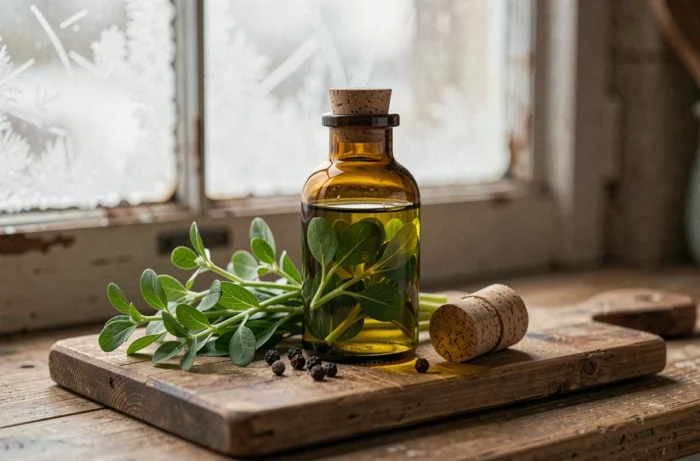
Less common than pickling or freezing, preserving in oil captures the fresh taste of purslane in a fatty medium. The oil isolates the leaves from the air and slows oxidation.
Thoroughly dry the leaves before immersing them in the oil: any trace of water can promote mold growth. Use a neutral oil or olive oil depending on the desired outcome. Place the jar in the refrigerator.
- Use this oil drizzled over roasted vegetables, pasta, or fish.
- Consume it within weeks of preparation for optimal flavor.
- If you want longer preservation, blend the dried leaves directly into the oil to make purslane pesto.
The pesto freezes very well in ice cube trays: one cube per dish is enough to bring back the taste of summer.
6. Sowing under cold cover to harvest fresh purslane in winter
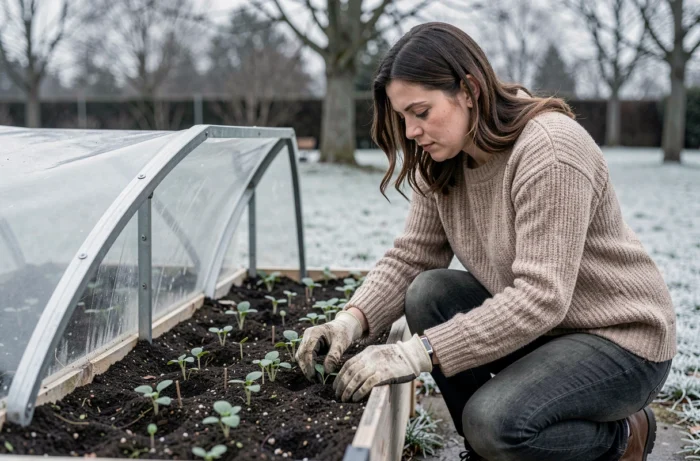
No preservation technique can replace the taste of fresh purslane. If you have a cold frame, a greenhouse, or even a well-exposed windowsill, late sowing allows you to extend the harvest into winter.
Purslane germinates easily in light, well-drained soil. Sow in late summer or early autumn under cover so that the plants reach a harvestable size before the short days. The plant tolerates cool temperatures as long as it is protected from direct frost.
Harvest the leaves as needed, cutting the stems without uprooting the plant. This method provides fresh purslane for winter salads, something no jar can offer. Be sure to only harvest from healthy soil, away from treated areas or road edges, as the quality of purslane directly depends on its growing environment.
Each of these six methods serves a different purpose: powder for seasoning, frozen cubes for soups, fermented jars for appetizers, vinegar condiment, flavored oil, or fresh leaves under cover. The most effective approach remains to combine two or three techniques depending on the quantity harvested and the available storage space.