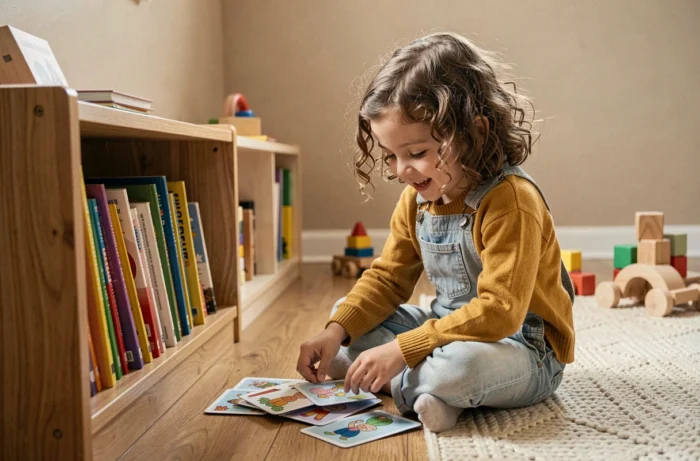
The development of a child relies on a set of fundamental needs: emotional security, the opportunity to explore, and recognition of their emotions. Since 2025, children’s mental health has been officially declared a national health priority in France, with surveys coordinated by Santé publique France (Enabee for ages 6-11, EnCLASS for middle and high school students).
This institutional framework confirms that daily support goes beyond simple “good parenting practices”: it involves developing measurable psychosocial skills in the child, such as emotional management, empathy, or problem-solving.
Psychosocial skills: what the child builds before academic knowledge
Psychosocial skills encompass the ability to identify one’s emotions, communicate with others, and resolve conflicts without violence. They are developed well before entering primary school, starting from everyday interactions.
Specifically, a child who learns to name what they feel (anger, frustration, joy) develops a more stable emotional regulation in the long term. To support this process, a few guidelines help:
- Verbalize the observed emotion rather than deny it: “You seem angry because your toy broke” allows the child to connect bodily sensation with a precise word.
- Offer behavioral alternatives after validating the emotion: hitting a pillow, drawing their anger, blowing slowly.
- Revisit the emotional episode calmly, in the evening for example, to anchor understanding without the pressure of the moment.
This work of verbalization is not trivial. Enabee surveys show that the well-being of children aged 6 to 11 remains a mixed subject, with improvements in some indicators but persistent psychological suffering. An emotionally equipped child approaches these difficulties with more resources.
Thematic resources exist to delve deeper into these topics according to the child’s age, such as the child page of Maman du Net, which gathers content suitable for each stage of development.
Screens and young children: the French regulatory framework since 2025
The issue of screens has changed status in France. Since January 2025, the recommendation “no screens before age 3, including background noise” is included in the health booklet. It is no longer just a pediatrician’s advice among others; it is an official mention that every parent receives at the birth of their child.
This clarification about “background noise” is crucial. A television on in the room, even if the child is not watching it directly, fragments their attention and reduces the amount of verbal interactions with the present adult. Passive exposure to screens is now treated with the same vigilance as active exposure.
Applying screen guidelines without creating conflict
Brutally banning screens for a child who already has access often leads to tantrums. A gradual approach works better:
- Define specific time slots (after snack time, never during meals) rather than a vague hourly limit that no one respects.
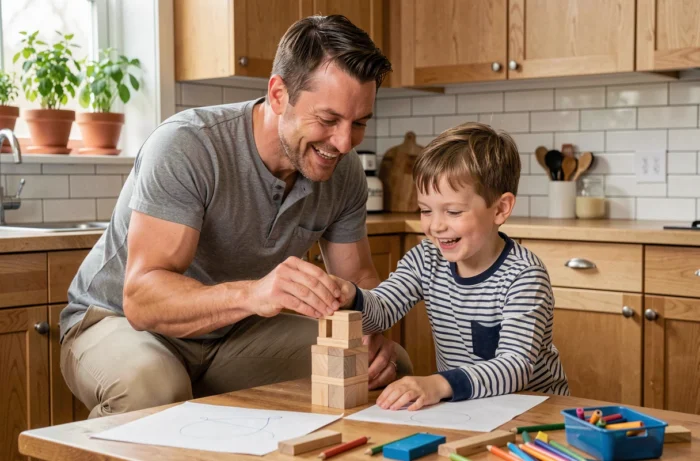
- Replace the removed screen time with an activity that engages the hands: playdough, building, drawing, pot gardening on a balcony.
- Apply the same rule to adults during shared moments, as the child replicates what they observe in the parent.
The topic of screens illustrates a broader principle: establishing a clear framework and maintaining it over time provides the child with predictability that strengthens their emotional security.
Children’s biological rhythms: sleep and nutrition as foundations for development
Sleep structures the capacity for learning, emotional regulation, and physical growth. A child whose bedtime varies significantly from day to day often shows signs of increased irritability and concentration difficulties.
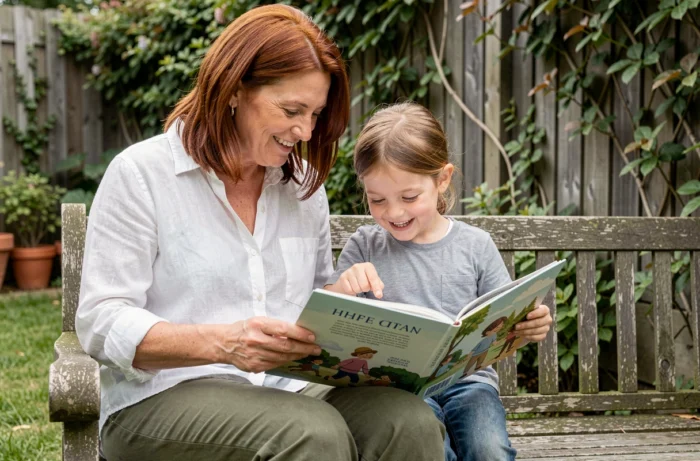
Maintaining a stable bedtime ritual (same sequence of actions, same time within fifteen minutes) helps the child’s brain anticipate the transition to sleep. This ritual can be short: brushing teeth, putting on pajamas, reading a story or listening to an audio tale, then turning off the light.
Nutrition as a ground for autonomy
Mealtime is a moment when the child can exercise concrete choices. Offering two vegetable options instead of imposing a single dish, allowing the child to serve themselves with a small ladle, or involving them in a simple preparation step (washing tomatoes, mixing salad) transforms the meal into an exercise in autonomy.
This guided food autonomy avoids two common pitfalls: power struggles at the table (“you eat or you leave”) and compensatory snacking related to frustration. A child who participates in preparation is more likely to eat what they helped make.
Free play and boredom: underestimated levers for child development
Filling a child’s schedule with structured activities (sports, music, language classes) leaves little room for free play. Unstructured play, without rules imposed by an adult, is the natural way for the child to explore creativity, test hypotheses, and learn to negotiate with peers.
Boredom plays a complementary role. A child who says “I’m bored” goes through a moment of discomfort that, if not immediately filled by a screen or a proposed activity, often leads to personal initiative. Building a fort with cushions, inventing a role-playing game, drawing a treasure map: these spontaneous impulses enhance the capacity for initiative and self-confidence.
The parent’s role here is to resist the urge to “solve” boredom. Providing varied materials (sheets, crayons, cardboard, string) without giving precise instructions is enough to create a conducive environment.
Supporting a child’s development daily is less about multiplying stimuli and more about ensuring a regular foundation: named emotions, controlled screens, respected rhythms, and time where nothing is planned. It is these spaces of structured freedom that allow the child to grow at their own pace.