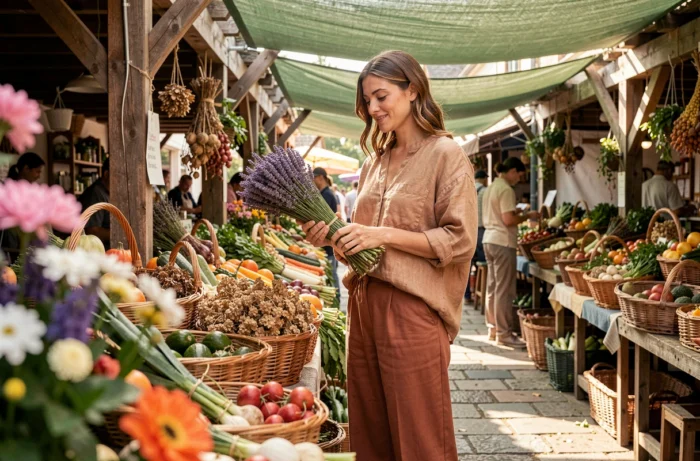
The cosmetic aisles and shared gardens tell the same story this summer: natural doesn’t just mean a label on a bottle anymore. Behind the term “natural trends,” there are concrete changes in how we consume, travel, and take care of ourselves. Some have been visible for a few seasons, while others stem from European regulations that will reshape the landscape starting this fall.
European anti-greenwashing directive: what changes for natural products in September 2026
Have you noticed those green logos self-awarded by brands, with mentions like “eco formula” or “100% natural” without any proof? The Directive (EU) 2024/825, applicable from September 27, 2026, makes these practices illegal.
The text prohibits generic environmental claims (“green,” “environmentally friendly,” “eco-responsible”) unless they are backed by verifiable environmental performance. Self-created naturality labels by brands will also disappear: only labels based on independent certification will remain authorized.
For consumers, the consequence is direct. Cosmetic products, dietary supplements, or household items that displayed a “natural” message without a solid reference will need to change their communication or remove these mentions. This tightening affects the entire European Union, not just France.
This September deadline is already pushing brands to rethink their marketing formulations. If you follow the trends on Zaturelle’s site, you will notice that serious players in the sector have been anticipating this shift for several months by documenting their manufacturing processes.
Natural cosmetics in 2026: the active ingredients replacing synthetic chemistry

The global market for natural cosmetics is expected to reach $55.4 billion by 2026. This growth is explained by a fundamental shift: buyers are no longer satisfied with green packaging. They read ingredient lists.
Among the active ingredients gaining ground, bakuchiol stands out. It is a plant extract from the Psoralea corylifolia plant, used as an alternative to retinol. It offers comparable anti-wrinkle effects without causing the frequent irritations associated with synthetic retinol. Another notable trend: biotech fermentation applied to natural ingredients. The principle involves transforming plant extracts through fermentation to enhance their bioavailability, meaning the skin’s ability to absorb the actives.
Fermented adaptogens (ashwagandha, reishi, astragalus) are also entering topical treatments after conquering the dietary supplement market. Their promise: to help the skin better respond to oxidative stress.
- Bakuchiol replaces retinol in anti-aging treatments, with fewer side effects on sensitive skin.
- Fermented actives (from K-Beauty and J-Beauty) improve the penetration of plant-based active ingredients.
- So-called “skinimalist” formulas reduce the number of products in the routine to three or four steps, each multifunctional.
Fewer products, but better formulated: this summarizes the skinimalist movement that is establishing itself sustainably.
Nature destinations and slow travel: the tourism trend this summer
Natural is not just about the bathroom. Travel choices reflect the same trend. The destinations attracting visitors this summer share a common point: they offer immersion in a preserved space rather than a series of visits.

Slow travel involves staying longer in one place, prioritizing land travel, and integrating into local life. An island accessible by ferry rather than by plane, a castle transformed into a guesthouse in the middle of a natural park, a car-free mountain village: the natural setting becomes the destination, not just a backdrop.
This approach changes the criteria for choice. Proximity to a wild space, air quality, and the possibility of hiking from the accommodation matter more than the presence of a museum or a historic square. Southern European countries (Portugal, Croatia, mainland Greece) are seeing their ecotourism offerings grow, with accommodations highlighting their integration into the landscape.
How to distinguish a true natural product from a false label
With the European directive coming into effect in September, the question becomes concrete. Even before this date, a few reflexes can help sort marketing from reality.
- Check if the displayed label is based on an independent certifying body (Ecocert, Cosmos, Natrue) or if it is a logo created by the brand itself.
- Read the INCI list (International Nomenclature of Cosmetic Ingredients): the first ingredients listed are those present in the largest quantities.
- Be wary of terms like “inspired by nature” or “made with,” which do not commit to anything regarding the actual composition of the product.
- Prefer brands that publish their percentages of naturally sourced ingredients, verified by a third party.
Organic certification does not cover the same requirements as the term “natural.” A certified organic cosmetic must meet specific criteria regarding the origin of raw materials, allowed processing methods, and the absence of certain substances. The term “natural” alone, without certification, offers no regulatory guarantee before September 2026.
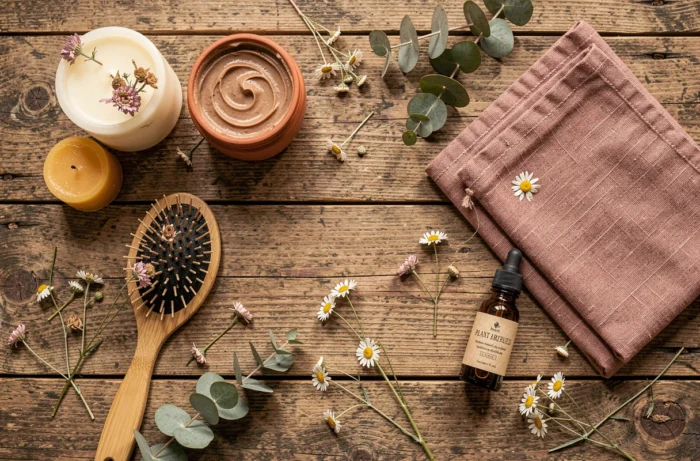
The coming months will clarify the landscape. Brands that have invested in transparency for several years will be best positioned. For consumers, the most reliable reflex remains to look for the name of the certifying body rather than relying on the color of the packaging.