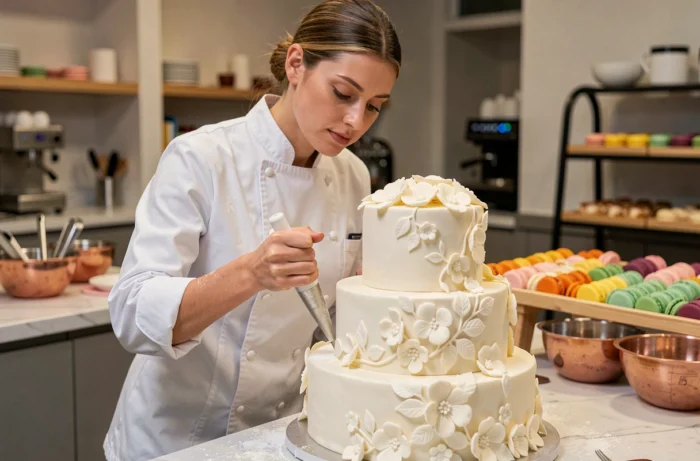
The sweet vocabulary changes faster than the displays of pastry shops. Behind the gourmet trends emerging in 2026, two forces are working in parallel: a stricter nutritional regulation surrounding the Nutri-Score and a creativity driven by social media, where each dessert must appeal to the eye before the palate. These two dynamics are reshaping what consumers expect from a sweet product.
Revised Nutri-Score and reformulation of sweet desserts
An order dated March 14, 2025, has tightened the calculation method of the Nutri-Score in France, with immediate effect and a packaging update deadline extending until 2027. The new calculation penalizes sugars and salt more heavily. The result: three to four products out of ten change their letter, particularly among breakfast cereals and desserts.
For manufacturers of biscuits, candies, and sweet snacks, the constraint is direct. Maintaining an acceptable Nutri-Score without sacrificing taste requires rewriting recipes: less added sugar, more fiber, and shorter ingredient lists leaning towards “clean label.” Several French brands are already reformulating their ranges to anticipate the 2027 deadline.
This revision is part of a broader European coordination. Since late 2025, a revised Nutri-Score algorithm is being gradually implemented in adopting countries, including Germany. Brands that export sweet products must therefore navigate a tightening framework on both sides of the Rhine. By browsing the articles from Gourmandises et Bavardages, one can gauge how much this regulatory pressure is already fueling discussions among professionals and pastry enthusiasts.
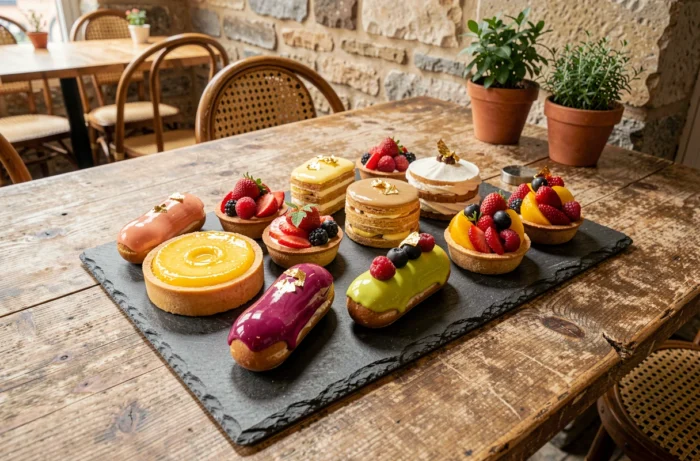
Tart textures and tangy flavors: what consumers want in 2026
Recent consumer studies all point in the same direction: sweet pleasure is not disappearing; it is transforming. Tanginess is gradually replacing straightforward sweetness in the creations that are most appealing, from citrus tarts to desserts made with passion fruit or yuzu.
The play of textures is another strong focus. A successful dessert in 2026 layers multiple sensations in the mouth: crunchy, creamy, melting. Pastry chefs are working with contrasts that simple Instagram photography cannot fully convey, but that short videos (TikTok, Reels) particularly highlight.
Calibrated portions and guilt-free pleasure
The “perfect portion” trend accompanies this shift. Consumers want concentrated pleasure in a reduced format. The large cake to share is giving way to carefully crafted individual pastries, where each bite is designed as a complete experience.
This reduced format also responds to the pressure of the Nutri-Score: a smaller dessert mechanically displays a less penalizing nutritional profile per serving. Indulgence and health find common ground here.
Sweet street food and social media: the virality circuit
Bubble tea, fluffy pancakes, cheese-filled corn dogs: these products of globalized street food circulate from one country to another via social media even before landing in French shops. Their common point is an aesthetic designed for online sharing, with bright colors and spectacular textures.
The mechanism has become predictable. A content creator films a product in Seoul or Dubai. The video accumulates millions of views. French brands adapt the concept within weeks. This shortened cycle explains why the sweet landscape is renewing so quickly.
Nutritional limits of viral street food
These viral products are generally too fatty, too sugary, and ultra-processed, as noted by Anne Parizot, a university professor in information and communication sciences. Consumed regularly as a snack or during tea time, they raise health questions that research is just beginning to explore.
- Bubble tea contains tapioca pearls cooked in a sweet syrup, added to a sweetened milk tea, making it a far more caloric drink than classic tea.
- The fluffy pancake, this thick pancake that quivers like a soufflé, owes its texture to a high proportion of sugar and fat.
- Dubai chocolate, a recent viral phenomenon, combines chocolate, pistachio cream, and kadayif (shredded filo pastry), resulting in a spectacular taste but a very high caloric density.
The paradox is clear: the same consumers who demand “clean label” desserts and a good Nutri-Score enthusiastically share ultra-processed creations on their feeds.
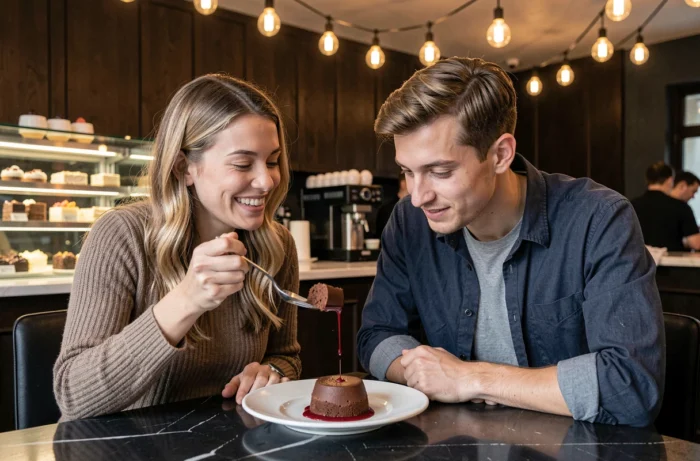
French pastry and world flavors: the fusion that is settling in
Fusion cuisine is not new, but it is taking a particular form in sweet pastry. French chefs are incorporating ingredients from Asia, Africa, or the Middle East into classic technical bases. Matcha, black sesame, bissap, or orange blossom can be found in entremets, choux, or tarts constructed according to the codes of French pastry.
This fusion works when technique serves flavor, not the other way around. A choux pastry with black sesame praline is only interesting if the sesame truly adds something beyond the visual effect. The most striking creations of 2026 are those that find a balance between the identity of the imported ingredient and the rigor of French craftsmanship.
Rustic summer fruit tart: an assumed counter-current
In the face of this globalization of flavors, an opposing movement is gaining ground. The rustic summer fruit tart, with its imperfect crust and barely cooked fruits, is establishing itself as a full-fledged pastry trend for 2026. Less ostentatious technique, more raw product. The taste of the fruit prevails over visual prowess.
This return to simplicity appeals to a clientele weary of architectural desserts. Indulgence here finds a more direct, seasonal register that contrasts with the viral creations on social media.
The sweet trends of 2026 are advancing in two opposing directions: on one side, a globalized street food driven by virality and visual spectacle; on the other, a pastry refocused on the product, constrained by a regulatory framework that will only tighten by 2027. The recipes that will stand out will be those that manage to be photographed, shared, and reformulated without losing any pleasure in the mouth.