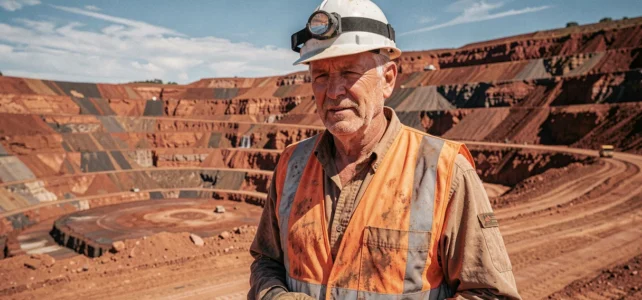
On a mining site in the Pilbara, the alarm goes off at 4:30 AM. By the time you put on your steel-toed boots, gulp down a coffee in the mess, and grab your access badge, the shift starts before the sun touches the horizon. This rhythm is discovered by hundreds of French people on working holiday visas each year as they arrive in northwestern Australia, often after weeks of job searching from Perth or Kalgoorlie.
Managing Fatigue on Mining Sites: What the 2025 Code of Practice Changes
TikTok videos show giant trucks and bundles of cash. They rarely depict the regulatory constraints that govern every hour spent underground or in open air. Safe Work Australia published a new model code of practice on fatigue in September 2025, applicable to shift work sectors, including mining.
This code treats fatigue as a risk to physical and psychological health, just like a fall from height or chemical exposure. Employers must now demonstrate how they integrate this risk into their safety management system.
In practical terms, the benchmarks set by the code structure daily life on site. One might choose to work in the mines in Australia for the salaries, but it is this regulatory framework that dictates the actual pace of the days.
Among the operational recommendations of the code:
- Do not work more than three consecutive nights, and limit sequences to five consecutive workdays
- Ensure at least twelve hours of rest between shifts and at least one full day off per week
- Avoid starting work before 6 AM or extending it beyond 10 PM, with breaks of at least thirty minutes every five hours
On the ground, feedback varies on this point: some companies strictly adhere to these benchmarks, while others maintain more intensive rosters inherited from old practices. The trend is towards gradual alignment, but the classic roster of “two weeks on, one week off” with twelve-hour shifts remains common.
FIFO Roster and Camp Life: What a Typical Rotation Looks Like
The FIFO (Fly-In, Fly-Out) model defines the living conditions of most mining workers in remote areas. You fly from Perth, sometimes from Townsville or Cairns, to a camp located in close proximity to the extraction site.
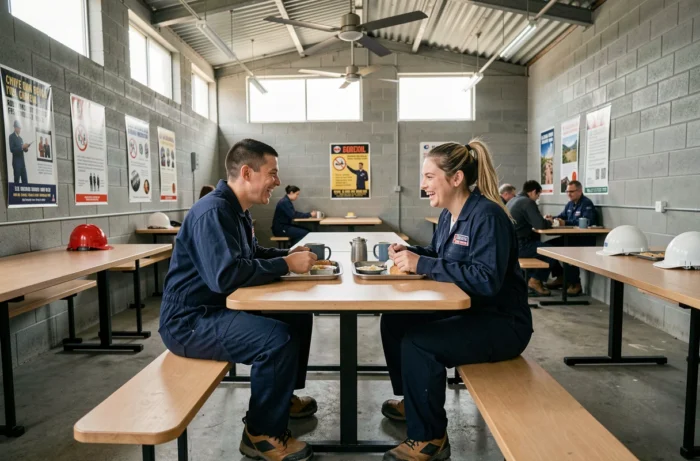
The camp replaces the city for the entire rotation. You sleep in individual rooms (the “dongas”), eat in the mess three times a day, and movements are limited to the commute between accommodation and the workplace. No shopping to do, no rent to pay on site.
A Typical Day on a Twelve-Hour Roster
The morning shift starts between 5:30 AM and 6 AM. Safety briefing, vehicle or equipment inspection, then continuous work until the meal break. The afternoon stretches until 5:30 PM or 6 PM. After dinner, there is little time left for anything other than a shower, a video call, and sleep.
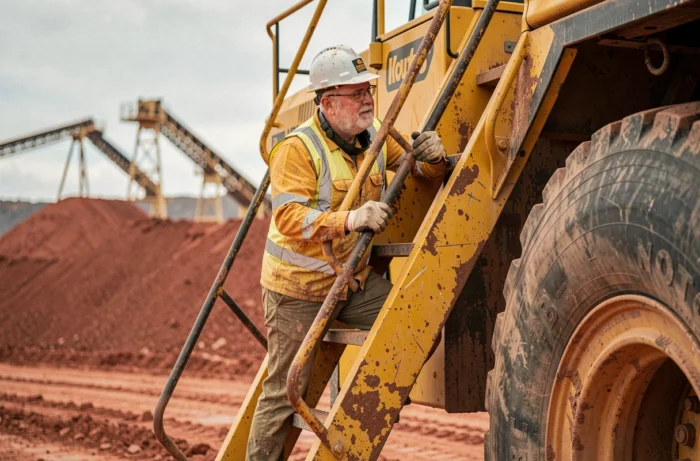
Positions vary greatly. Driving a haul truck weighing several tons is nothing like cleaning facilities or maintaining conveyors. Salary directly depends on the position, site, and type of contract (casual, fixed-term, permanent). Entry-level positions, often accessible to holders of working holiday visas, involve industrial cleaning, laboring, or assisting operators.
Isolation and Mental Health in FIFO: The True Cost of Mining Salaries
The least documented aspect, yet the most structuring, concerns the psychological impact of life on rotation. Geographic isolation, combined with weeks without physical contact with loved ones, heavily weighs on morale.
Mineral Resources, one of the major Australian mining groups, has implemented dedicated mental health programs at its sites. The psychological pressure of FIFO drives many workers to leave the sector before the end of their contract. Campaigns like “R U OK?” (an Australian prevention initiative) have become common in mess halls and break rooms.
For French people on working holiday visas, the language barrier adds an extra layer of difficulty. One might master conversational English without understanding Australian mining jargon, filled with abbreviations and local slang. This partial misunderstanding reinforces the feeling of isolation, especially in the first few weeks.
What Helps on the Ground
Several workers mention the importance of routine outside of shifts: exercising in the camp gym, regular calls with family, reading. Modern camps offer gyms, basketball courts, and sometimes a pool. Structuring rest hours prevents the feeling of emptiness that sets in after a few days of rotation.
The return to Perth or a coastal city during the week off takes on a special dimension. Many FIFO workers describe a stark contrast between the highly regulated life of the camp and the sudden freedom of R&R (Rest and Recreation). Managing this transition is part of learning the job.
Mandatory Training and Certifications to Access Mining Sites
You cannot set foot on a mining site without a minimum of certifications. The White Card (safety training on construction sites) is the basic prerequisite. It covers general workplace safety rules in Australia and is completed in one day.
Depending on the targeted position, additional training is required:
- The Australian driver’s license (or its conversion), necessary for any position involving a vehicle on site
- Specific tickets for heavy machinery (front-end loader, excavator, haul truck), issued by certified organizations
- Working at Heights and Confined Space Entry training for maintenance positions underground
Each certification has a cost and a validity period. Investing in this training before applying significantly increases the chances of being hired, but represents an initial budget that many working holiday visa holders underestimate.
The Australian mining sector remains one of the highest-paying in the world for positions accessible without a university degree. Daily life on site, between regulated fatigue, geographic isolation, and camp discipline, naturally filters those who stay from those who leave. Understanding these realities before committing helps avoid the disillusionment that social media perpetuates.