
A soft sofa and three scented candles are not enough to make a home a cocoon. We often forget that the feeling of refuge primarily depends on physical parameters: thermal insulation, quality of natural light, acoustics between rooms. Transforming your house into a cocoon means working on these foundations before thinking about cushions.
Insulation and thermal comfort: the invisible foundation of a cocoon home
No matter how many throws you pile on, if the walls let in the cold or if summer heat stagnates in the attic, the cocooning effect collapses. The thermal comfort of a home is directly linked to measurable levels of stress and depression, far beyond mere decorative feeling.
The law of April 9, 2024, has made energy performance a legal component of housing decency in France. Homes rated G are excluded from rental starting in 2025, F in 2028, and E in 2034. A poorly insulated home can no longer legally be a rental cocoon.
In practical terms, start by checking the airtightness of windows and the quality of attic insulation. A thick thermal curtain in front of a poorly insulated bay window already changes the game in winter. For those who want to learn everything about Media Gaga, the home section details several complementary approaches on these topics.
Summer comfort deserves equal attention. Closing exterior shutters during hot hours, using a ceiling fan, and opting for natural materials (linen, cotton) on furniture reduce the perceived temperature without air conditioning. Feedback varies on this point depending on the orientation of the home and the region, but the principle remains the same: control the temperature before decorating.

Natural light and soft lighting: creating a cocooning atmosphere room by room
Light is the most underestimated lever when transforming a space into a cocoon. A living room bathed in white neon lights will never provide a sense of refuge, even with the best decoration in the world.
Increasing daylight in the living room and bedroom
Start by clearing the openings. A tall piece of furniture placed in front of a window, opaque curtains drawn during the day, or a cluttered windowsill reduce the brightness of the room. Replacing yellowed sheers with light, clear fabric immediately changes the atmosphere.
In the bedroom, natural morning light promotes waking up and the circadian rhythm. If the room faces north, a mirror placed opposite the window redistributes light without any renovations.
Choosing artificial lighting suitable for each space
In the evening, switch to warm, indirect sources. Here are the principles to apply:
- Multiply low light sources (table lamps, string lights, wall sconces directed toward the ceiling) rather than relying on a single central ceiling light
- Favor bulbs with a warm color temperature, around 2,700 K, for the living room and bedroom
- Install a dimmer on the main lighting in the living room to adjust the intensity according to the time of day
A good cocooning lighting setup relies on a minimum of three light sources per room. Avoid perfect symmetry: a reading lamp near the sofa, a candle on the coffee table, and a string light on a shelf create a natural play of shadows.
Natural materials and soft colors: the palette of a cocoon interior
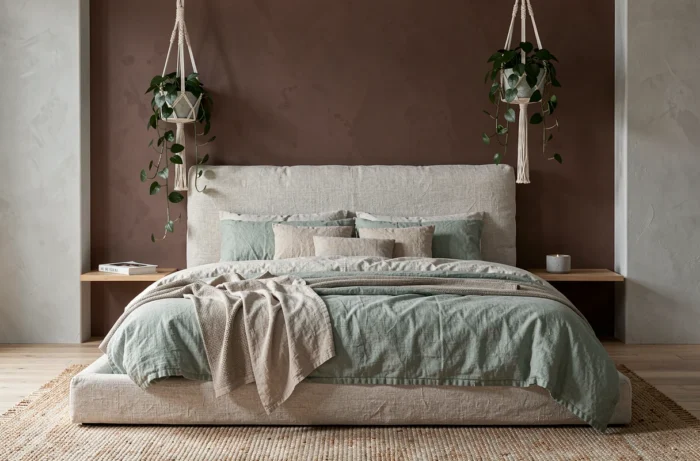
Smooth synthetic materials give a cold sensation to the touch. For a tangible cocooning effect, prioritize textures that invite touch: crumpled linen for curtains, boucle wool for a throw, brushed cotton for the duvet cover.
The principle: every surface that comes into contact with the body deserves a natural material. Where the skin rests (sofa, bed, rug under bare feet), invest in textile quality rather than the quantity of decorative cushions.
Shades and colors for a calming atmosphere
Colors influence the perception of size and warmth in a room. Neutral and warm shades (sand beige, light terracotta, off-white, sage green) envelop without darkening. Dark walls work in a large, well-lit room but visually shrink a small living room.
You don’t have to repaint everything. Changing cushion covers, adding a rug in warm tones, or replacing a bedspread can alter the dominant palette of a room in just a few minutes.
Sensory decoration: beyond the visual for a true cocoon
A cocoon is also felt through smell and sound. Decorative items focus on what we see, but the complete sensory dimension makes the difference between a “pretty” interior and one where you truly feel good.
- Acoustics: a thick rug, heavy curtains, and shelves filled with books absorb the resonances of a room with hard floors. The perceived calm significantly increases
- Smell: a quality scented candle or a natural oil diffuser (no harsh synthetic fragrances) anchors an olfactory signature in the living space
- Touch: varying textures in the same space, for example, a corduroy cushion next to a twisted knit throw, enriches the tactile experience without overloading the decor
Acoustic comfort transforms a resonant living room into a true refuge. We rarely think about it, yet it is often what is missing in modern interiors with smooth surfaces and laminate floors.
Transforming your house into a cocoon does not involve a list of decorative purchases. Insulation, light, materials, and acoustics form a concrete foundation. Once these parameters are addressed, each textile or lighting addition produces an amplified effect because the foundations of comfort are already in place.