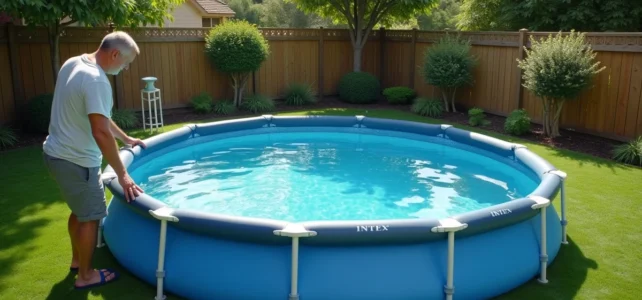
The Intex 58983 pool is a rectangular tubular pool from the Metal Frame range, designed for quick assembly without specialized tools. Its steel frame and triple-layer PVC liner distinguish it from inflatable models, but this apparent simplicity conceals some technical points that condition its longevity and the safety of the installation.
Electrical Safety of the Pump: The Overlooked Point in Manuals
Before discussing the ground or assembly, the question of the electrical supply for the filtration system deserves to be addressed first. Technical guides published since 2024 emphasize the importance of maintaining safety distances between the pool and the pump according to the IP protection rating.
For an Intex cartridge or sand pump, the current recommendation is to maintain 2 to 3.5 meters minimum between the pump and the pool. For a sand filter, some guides even advise placing the equipment between 3.5 and 5 meters from the pool, on a flat surface and slightly below the water level to facilitate priming.
A dedicated differential circuit breaker on the line powering the pump is recommended. Plugging the filtration system into a multi-socket extension or a circuit shared with other garden devices exposes you to overload risks. This point is often neglected in domestic installations, even though it conditions the electrical compliance of the entire setup.
For everything you need to know about the Intex 58983 pool, the compact dimensions of the pool facilitate location choices, but do not exempt you from these precautions regarding the electrical circuit.
Preparing the Ground for Intex Tubular Pool: Beyond Just “Flat Ground”
All Intex manuals mention the necessity of flat ground. The problem is that “flat” is not enough to describe what the ground must actually be to support the weight of a filled pool.
What the Ground Must Support
A rectangular Metal Frame pool, even of modest dimensions, represents several hundred kilograms once filled. This load is distributed across the feet of the metal frame and over the entire surface of the liner on the ground. A soft, sandy surface, or one with even a slight slope, causes progressive deformation of the frame.
The ideal ground has the following characteristics:
- A compacted surface, free of stones, roots, or plant debris that could puncture the liner from below
- A leveling checked with a bubble level on at least two perpendicular axes, with a maximum deviation of a few centimeters along the entire length
- A ground mat or protective tarp placed between the ground and the bottom of the pool to limit abrasion and stagnant moisture
Grass, Slab, or Stabilized Sand
Placing the pool directly on grass is the most common solution, but also the one that generates the most problems in the medium term. The grass under the pool dies within a few days, the ground becomes damp and settles unevenly. Compacted stabilized sand remains the most reliable support for an above-ground tubular pool.
A concrete slab is excessive for a pool of this range, but a bed of a few centimeters of well-compacted sand covered with geotextile offers a durable compromise without heavy work.
Assembling the Metal Frame: Sequence and Common Pitfalls
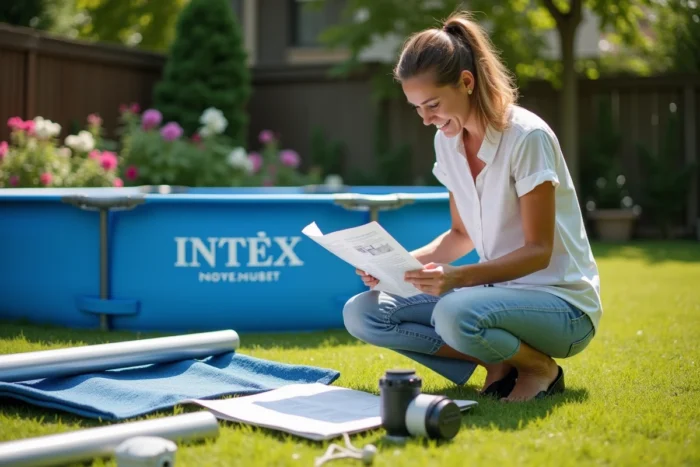
Small rectangular Intex tubular pools can be assembled in about 30 minutes with two people. This time assumes that the liner has been previously spread out in the sun for about fifteen minutes to soften it, which many users overlook.
Assembly Order
The liner is laid flat on the ground mat, then the horizontal tubes are inserted into the sleeves sewn at the top of the liner. The vertical tubes (legs) are then connected to the T-connectors. Each tube must click audibly into the connector, otherwise the frame may come apart under the pressure of the water.
A common mistake is to fill the pool before checking that all the legs are properly embedded in the ground and that the liner is centered without folds. Correcting a fold once the pool is half-filled is very difficult and often requires partial draining.
Filling and Watering
Filling is done gradually. The first centimeters of water help smooth the bottom of the liner by gently pulling it towards the edges. Once the pool is filled to the level indicated in the manual (marker on the liner or a few centimeters below the filtration openings), the pump can be connected.
Filtration and Water Treatment: Adapting the System to the Pool Volume
The Intex 58983 pool is generally delivered with a low-flow cartridge pump. This type of filtration is suitable for seasonal use, provided that a daily filtration cycle is respected according to the outside temperature.
During periods of high heat, the filtration time must increase significantly. A commonly cited rule is to divide the water temperature by two to obtain the number of hours of filtration per day. For a pool exposed to full sun, this can represent a considerable duration.
Chemical treatment of the water (chlorine, bromine, or active oxygen) must be dosed according to the actual volume of the pool. Overdosing chlorine in a small volume degrades the liner more quickly and irritates the skin. A pH/chlorine test kit remains the minimum to maintain healthy water without damaging the walls.
- Clean or replace the filtration cartridge every two weeks during peak season
- Check the pH of the water at least twice a week (ideal range between 7.2 and 7.6)
- Cover the pool with a tarp when not in use to limit debris and evaporation
Installing an Intex 58983 pool requires neither a building permit nor specific technical skills. Success mainly depends on the quality of the ground preparation and adherence to electrical distances for the pump, two steps that take longer than the assembly itself.