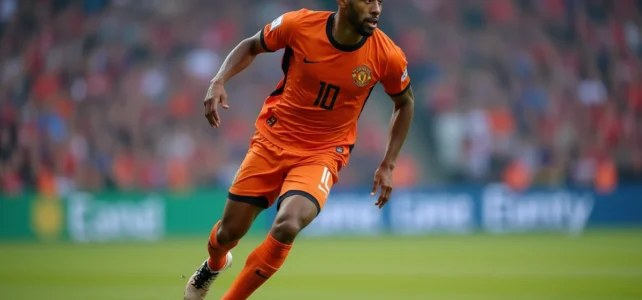
When you open a score application on a World Cup night, you find yourself overwhelmed with notifications, video summaries, and rankings updated every minute. The problem is that the real underlying issues get overlooked: rule changes, technological stakes, schedules colliding between disciplines. Following sports news in 2026 is primarily about sorting what matters from what is just noise.
New Rules for the 2026 World Cup and Their Tactical Consequences
There is a lot of talk about scores and individual performances, but a regulatory change can alter the dynamics of an entire tournament. For the 2026 World Cup, FIFA has introduced measures to speed up the pace of play: quicker execution of throw-ins and goal kicks, with immediate penalties for exceeding the allotted time.
Specifically, for goalkeepers, this means they can no longer waste time holding the ball at the end of a match. Teams that relied on clock management to protect a lead must rethink their approach. A goalkeeper who exceeds the time limit faces a direct penalty, which changes the defensive strategy in the final minutes.
For coaches like Didier Deschamps with the Blues, this constraint forces a rethinking of end-of-match management. One can no longer simply pass the ball around between defenders and the goalkeeper to buy seconds. Late substitutions of defensive midfielders take on a new dimension when the low block can no longer rely on slow restarts.
Those who follow sports news on Free Sport will find this type of tactical analysis applied to ongoing matches, beyond just the final score.
AI Surveillance in the World Cup Stadiums
The other dimension of the 2026 World Cup that flies under the radar of traditional news feeds is the technological deployment around the stadiums. According to the French Compliance Institute, this edition is presented as the largest deployment of AI surveillance in sports history.
We are talking about intelligent video surveillance, automated analysis of spectator flows, and detection of risky behaviors. For spectators attending in the United States, this means different checks than what is known in European stadiums.
The stakes are not only security-related. Several questions arise regarding compliance:
- The protection of personal data of spectators filmed and analyzed in real-time, within a legal framework very different from the European GDPR
- The risks of algorithmic discrimination when automated systems identify “suspicious behaviors” based on opaque criteria
- The management of crowd flows by AI, which could redirect thousands of people simultaneously in case of an alert
This topic is technical, but it directly concerns anyone planning to attend a match. The experience in the stands changes when every movement is analyzed by an algorithm.
Football World Cup: Update on France’s Journey
On the field, the Blues have started their group stage with mixed signals. In the match against Norway, Ousmane Dembélé was decisive, both as a scorer and a provider. His rekindled partnership with Kylian Mbappé was the highlight of the match.
The defense, however, showed weaknesses. Dayot Upamecano and the backline were put under pressure, raising questions about the solidity of the defensive block for the remainder of the tournament. The French attack reassures, the defense worries, and this imbalance will shape Deschamps’ choices for upcoming matches.
The next encounter against Sweden will be a different test. Sweden offers a more physical and direct style of play than Norway, which will further challenge the central defense. The outcome of this match will largely determine France’s position in its group.
Additionally, an off-field episode marked the match against Norway: FIFA refused the tributes (black armbands, minute of silence) that the French team wanted to pay to Didier Deschamps’ mother, who recently passed away. This decision caused confusion and misunderstanding among the Blues’ entourage.
Rugby, Tennis, and Swimming: Other Sports Events at the End of June
Football monopolizes attention, but other major competitions are taking place simultaneously. In rugby, the Top 14 final between Toulouse and Montpellier is capturing the attention of the French rugby world. Toulouse, a regular in finals, faces a Montpellier team that has surprised this season.
In tennis, Wimbledon begins with its share of questions. Arthur Fils, who had to withdraw from Roland-Garros due to injury, will be present on the London grass. He maintains the mystery about the exact nature of his injury, leaving doubts about his actual fitness level. Among the women, Aryna Sabalenka has confirmed her preparation choices ahead of the tournament.
In swimming, the French championships are taking place in Saint-Étienne with a packed schedule. Léon Marchand, a four-time Olympic champion, is the star of a competition that also serves as a selection for upcoming international events.
These simultaneous events create a dense calendar where sports enthusiasts must juggle between time slots. Following the World Cup, Wimbledon, and the French swimming championships in the same week requires prioritization, and feedback on this point varies according to individual preferences.
The common thread of this late June 2026 is the overlap of stakes: a World Cup redefining its rules and surveillance, a developing Blues team, and disciplines refusing to cede all the spotlight to football. Keeping an eye on the entire sports landscape remains the best way not to miss a significant moment.