
A freshly mowed lawn loses all its effect when the grass overflows onto the paths or climbs along the flower beds. It’s the edge trimmer that makes the difference between a decent garden and a neat garden. However, it’s essential to choose the right model, because between a lightweight string trimmer and a blade edger, we are not talking about the same job or the same result.
String trimmer, edger, brush cutter: three tools for three situations
These three devices are often confused. Recent ranges, especially from Ryobi, clearly separate the product families. A classic string trimmer is used for light finishing around obstacles: fence posts, flower bed borders, tree outlines. It works horizontally, with a nylon line that cuts the overhanging grass.
The edger, on the other hand, attacks the lawn vertically to create a clean edge between the grass and a path or flower bed. This is the tool that gives the “pencil stroke” result seen in well-maintained gardens. Some models can do both by pivoting the head, but reviews vary on this point: versatility often comes at the cost of precision.
The brush cutter, more powerful, is aimed at tall grasses, brambles, and overgrown slopes. If you have a regularly maintained yard, it usually stays in the garage most of the time. Detailed comparisons can be found on taille-bordure-warrior.com to refine your choice based on your terrain configuration.
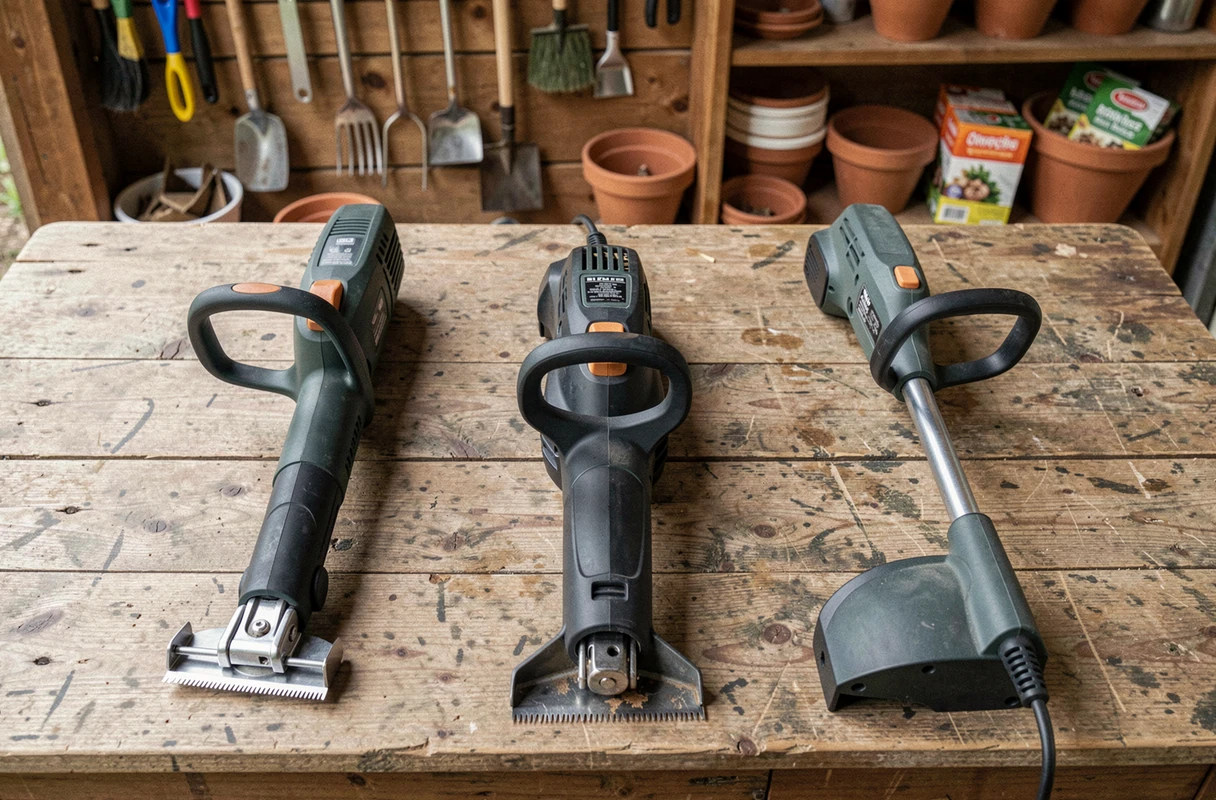
Battery, corded or gas: what type of power supply for your edge trimmer
The choice of power supply affects autonomy, weight, and range. We start from the terrain, not the technical specifications.
Small garden with accessible outlets
A corded electric model is more than sufficient. It is lightweight, starts instantly, and never runs out of battery. The constraint is the cable: beyond about twenty meters with an extension, it becomes cumbersome to maneuver around the flower beds.
Medium-sized yard without a nearby outdoor outlet
The battery becomes essential. Bosch and Ryobi platforms allow sharing the same charger and battery among several garden tools. This is a real economic argument when you already own a blower or hedge trimmer of the same brand. You need to check that the supplied battery lasts at least one complete finishing session, because a charger that takes several hours between uses disrupts the work rhythm.
Large yard or very extensive borders
The gas option remains relevant for large areas where battery autonomy is insufficient. In return, weight, noise, and engine maintenance make daily use heavier.
Nylon line of the edge trimmer: diameter and profile that change the cut
The line is the main wear part. Its diameter directly determines the cutting capacity. A thin line is suitable for soft grass around flower beds. A thicker line withstands tough grasses and gravel edges better but requires a more powerful motor to operate correctly.
The profile of the line is also important. There are three common shapes:
- Round: versatile, suitable for classic finishing on soft grass. This is the profile supplied by default with most models.
- Square or star-shaped: more aggressive cutting edge, effective on thick grasses and hard regrowth along mineral borders.
- Twisted: reduces noise and limits fraying, a good compromise for regular use without overly stressing the spool.
Adapting the line to the type of vegetation you are actually cutting prevents premature wear and jams. You save time with each session.

Seasonal maintenance of the edge trimmer and cutting frequency for a neat garden
An impeccable garden all year round does not require a high-end tool. It requires regularity. In the peak growing season, a session every one to two weeks keeps borders neat without excessive effort. We are talking about short sessions, rarely more than ten minutes in a medium-sized garden.
In spring, a first strong pass realigns the borders after winter. In autumn, a final refresh before the vegetative slowdown allows for a clean garden right from the start. Between the two, regularity does all the work.
Regarding the maintenance of the tool itself, three actions prolong its lifespan:
- Clean the casing and head after each use to avoid the accumulation of wet grass that corrodes the parts.
- Check the remaining line on the spool before starting, rather than discovering a shortage mid-work.
- Store the device in a dry place, with the battery removed if the model allows, to preserve the electrical contacts.
A well-maintained and regularly used edge trimmer gives a result that no decorative border can replace. It is the frequency of use that ensures neatness, not the raw power of the motor. The best model is the one you can easily take out of the garage, start without hesitation, and put away in two minutes.