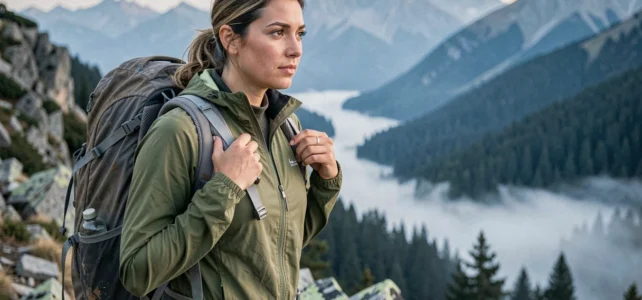
The level of risk associated with each outing determines the choice of outdoor equipment. A three-hour forest walk and a two-day high-altitude bivouac do not expose you to the same constraints, and the relevant equipment changes radically from one scenario to another.
Outdoor Equipment: Adapting Gear to the Actual Risk Profile
Recent guides converge on one point: clearly distinguish between day hikes, multi-day treks, self-sufficient bivouacs, and fast trails. Each outing format alters the priorities regarding protection, sleeping arrangements, navigation, and water autonomy.
The table below summarizes the concrete differences between three common outing formats.
| Criterion | Day Hike | Trek (2-4 days) | Self-Sufficient Bivouac |
|---|---|---|---|
| Bag (volume) | Small, less than 30 liters | Medium, 40 to 60 liters | Large, 50 liters and more |
| Sleeping | Not necessary | Sleeping bag + lightweight mattress | Tent + sleeping bag + insulating mattress |
| Water | Sufficient water bottle | Water bottle + identified resupply point | Water bottle + filtration or purification system |
| Navigation | GPS track on phone | Map + GPS + external battery | Paper map + compass + GPS |
| First Aid Kit | Minimal kit (band-aids, antiseptic) | Expanded kit (splint, emergency blanket) | Complete kit + repair materials |
| Stove | Optional | Recommended | Essential |
This table highlights a often-overlooked point: the volume of the bag stems from the type of outing, not the other way around. Buying a 60-liter bag for day hikes encourages unnecessary packing, which increases the load and fatigue.
To refine the choice of each piece of equipment, it is useful to consult the equipment on L’Esprit Nature to compare the categories suitable for each outing format.
Hiking Shoes and Backpack: Why Fit Takes Precedence Over Weight
The race for ultralight gear dominates discussions in outdoor forums. Recent sources nuance this trend: a poorly fitting bag or shoes degrade comfort and safety, regardless of their displayed weight.
Hiking Shoes: Fit Above All
A lightweight shoe that is too narrow causes blisters within the first hour of walking. Conversely, a heavier shoe that fits well to the width of the foot and the shape of the arch allows for a full day of walking without pain.
Criteria to check during fitting:
- The width at the metatarsals, which should not compress the toes when descending
- Ankle support, suited to the intended terrain (high-top for technical trails, low-top for smooth paths)
- The stiffness of the sole, firmer for rocky terrains and softer for trail running on dirt
Testing shoes at the end of the day, when the foot is slightly swollen, gives a more reliable idea of actual comfort in a situation.
Backpack: Adjusting the Back Changes Everything
A backpack whose back length does not match the wearer’s morphology shifts the weight onto the shoulders instead of transferring it to the hips. Adjusting the hip belt absorbs the majority of the load when it is correctly positioned on the iliac crests.
Two hikers of the same height may need different back sizes. Measuring the distance between the C7 vertebra (the bump at the top of the back) and the iliac crest helps choose the right size, regardless of clothing size.
Water Management on Outdoor Outings: Filtration and Purification
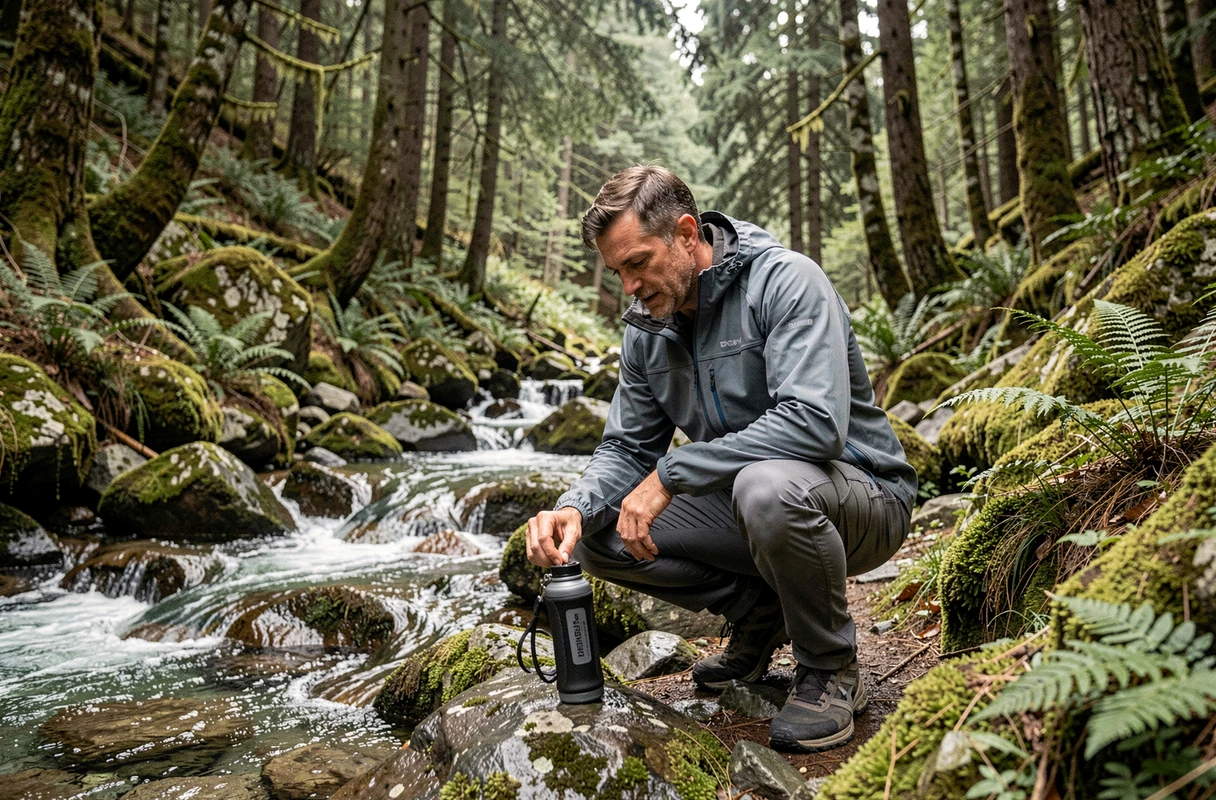
The water bottle remains the basic reflex, but it is not sufficient once the outing exceeds half a day in an area without guaranteed potable water. Filtration or purification of water becomes a central safety criterion for treks and bivouacs.
Three methods coexist, each with its limits:
- Pump or gravity filters eliminate bacteria and protozoa, but not all viruses
- Chemical tablets (such as chlorine dioxide) neutralize viruses and bacteria, but require a waiting time before consumption
- Portable UV systems act quickly, but depend on a battery and do not work in cloudy water
On day hikes on marked trails with fountains, a classic water bottle is sufficient. However, as soon as there is doubt about the quality of the available water along the route, bringing a treatment method avoids a real health risk.
First Aid Kit and Navigation: Posts Not to Be Neglected
Technical clothing, bags, and shoes attract attention during preparation. Navigation, rescue, lighting, and sun protection represent the foundation of safety for an outing, even before comfort in clothing.
A headlamp, for example, is not only useful for bivouacs. A late return on a forest trail can turn into a risky situation without lighting, even in summer when night falls later than expected.
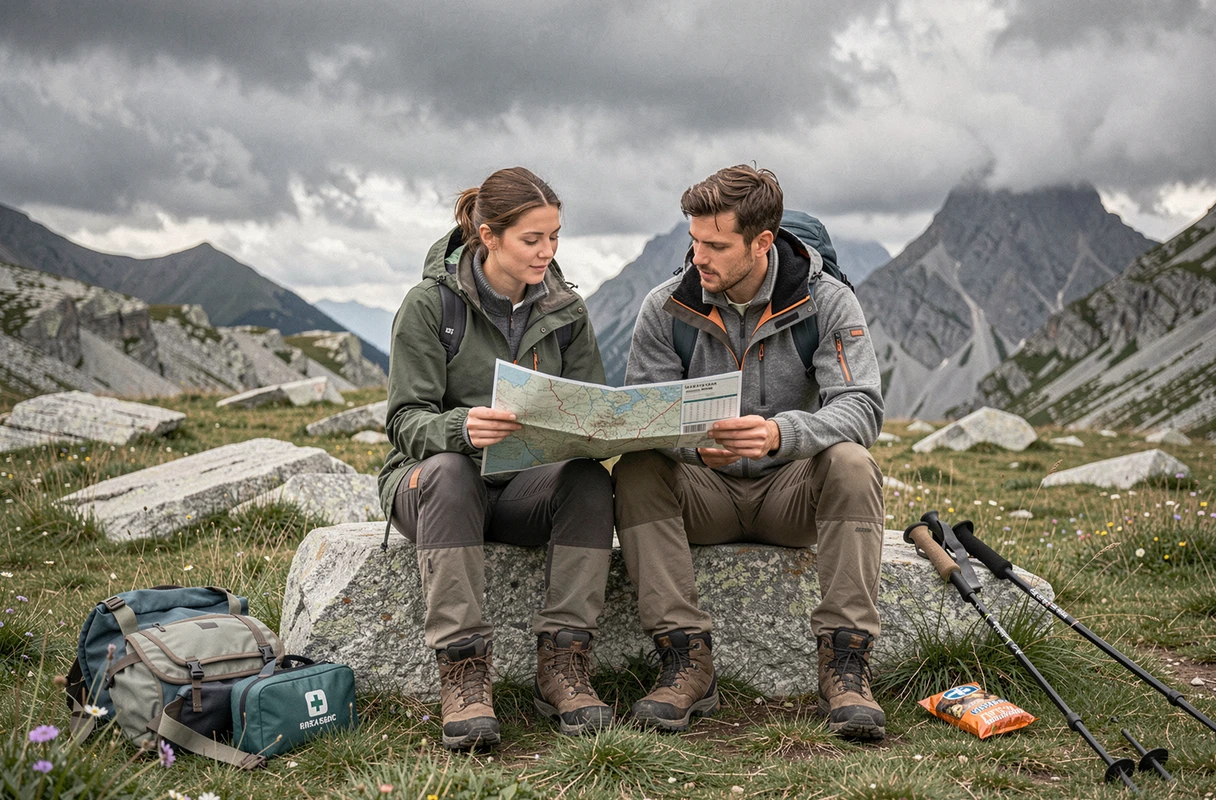
The paper map and compass may seem outdated compared to GPS, but they do not break down. On a multi-day trek, a phone’s battery can fail at the least opportune moment. Complementing GPS with a topographic map reduces a real risk of disorientation.
The first aid kit deserves the same reasoning based on risk. A minimal kit (band-aids, antiseptic) is suitable for a short outing on a busy trail. As isolation increases (less frequented trail, altitude, distance from help), adding an emergency blanket, a soft splint, and repair materials for the bag or tent changes the game in case of an incident.
Assessing the terrain, duration, isolation, and probable weather before packing remains the most reliable method to carry only what matters.