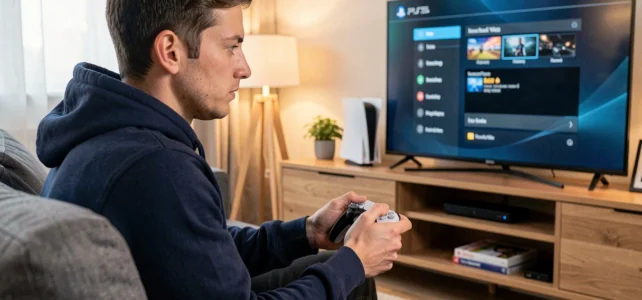
The long-term rental of PS5 consoles offered by Micromania is based on a formalized LLD contract, with regulated general conditions. It is neither a consumer credit nor a leasing with an option to purchase. The equipment remains the property of the lessor for the entire duration of the contract, and the tenant cannot claim any residual value at the end of the period.
LLD PS5 Micromania: contractual structure and absence of purchase option
The technical point that most commercial presentations overlook is the legal nature of the contract. Micromania offers a long-term rental without a purchase option. At the end of the contract, the console is returned. The tenant does not capitalize on anything.
This structure has a direct consequence on the total cost of ownership. By adding up the monthly payments over the entire duration of the contract, the cumulative amount exceeds the new purchase price of the console with controller and insurance. The surplus corresponds to the service (replacement, assistance) and the rental margin.
We recommend systematically comparing the total cost of the package over the contractual duration with the catalog price of the console at the time of subscription. For a detailed exploration of the available formulas, the rental of PS5 consoles at Micromania is the subject of a complete breakdown of the different pricing tiers.
The contract generally includes membership in the Micromania Rental Club program, insurance covering certain breakdowns, and a controller. The packages come in several levels (Starter, Premium), with price differences that mainly reflect the extent of coverage and included accessories.
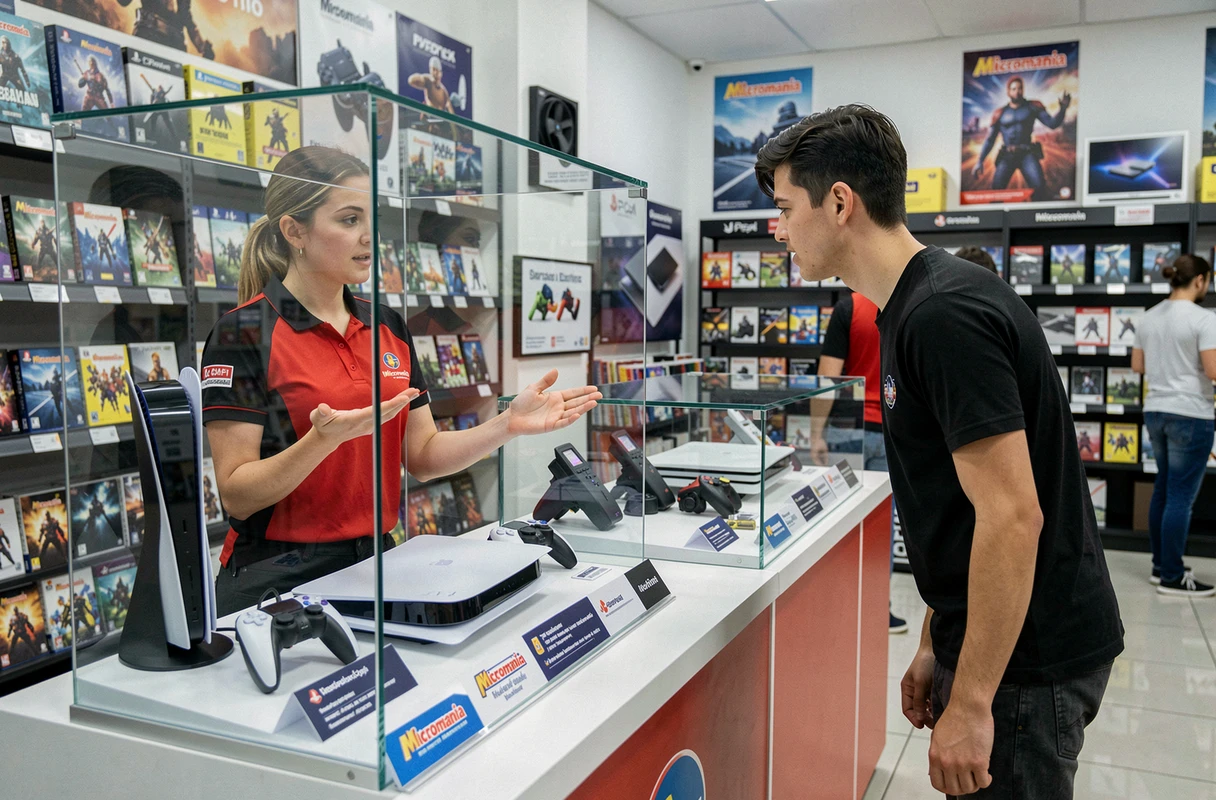
PS5 rental package: what the complete pack covers (and does not cover)
Micromania presents its packages as a “complete pack with maximum peace of mind.” Let’s break down what this actually covers.
- The new console (PS5, PS5 digital, or Nintendo Switch OLED depending on the chosen package), delivered with a wireless controller
- An insurance included in the rent, covering hardware failures except for damages caused by the tenant (fall, liquid, negligence)
- Membership in the Rental Club program, which provides access to commercial benefits in-store (occasional discounts on video games, priority on certain offers)
Games are never included in the package. The tenant finances access to the hardware, not to a software catalog. This is a major distinction compared to a subscription service like PlayStation Plus, which provides access to a library of titles but not to the hardware.
The insurance deserves careful reading. Exclusion cases (accidental damage, theft without break-in, loss) are common in this type of LLD contract. We observe that Micromania’s general conditions follow industry standards without any particular extended coverage.
Trade-in, second-hand, and physical store: the Micromania model facing the all-digital trend
One of the pillars of Micromania’s business model remains the trade-in of second-hand equipment and resale in-store. Trade-in boost operations (offering enhanced amounts for a PS5 exchanged for credit) are reserved for physical retail locations.
This operation creates a structural tension. On one hand, Micromania offers the rental of digital PS5s, consoles designed for a 100% dematerialized ecosystem. On the other hand, the store network derives a significant portion of its revenue from the sale of physical games and second-hand items.
The announced end of the physical PlayStation format
Sony has confirmed that the production of disc games for PlayStation will be gradually phased out. This transition changes the game for a distributor whose business relies on physical media. Specialized shops like Micromania, recently acquired by a new group, are looking to pivot towards services (rentals, subscriptions, merchandise) to compensate for the erosion of box sales.
Console rental is becoming a traffic lever in-store rather than a standalone profit center. The tenant who comes to subscribe or return their console passes through the retail location, generating additional sales on accessories, prepaid cards, and second-hand games still available.
What happens at the end of the LLD contract?
The return takes place in-store. The tenant returns the equipment in a condition compliant with the general conditions. There is no mechanism for a buyback at a reduced price. If the player wishes to continue with a new generation of console, they start a new contract without benefiting from any loyalty discount.
This is where the absence of a purchase option penalizes players who keep their equipment for a long time. A regular buyer can sell their PS5 on the second-hand market or take advantage of a trade-in operation. The tenant, however, has no exit value.
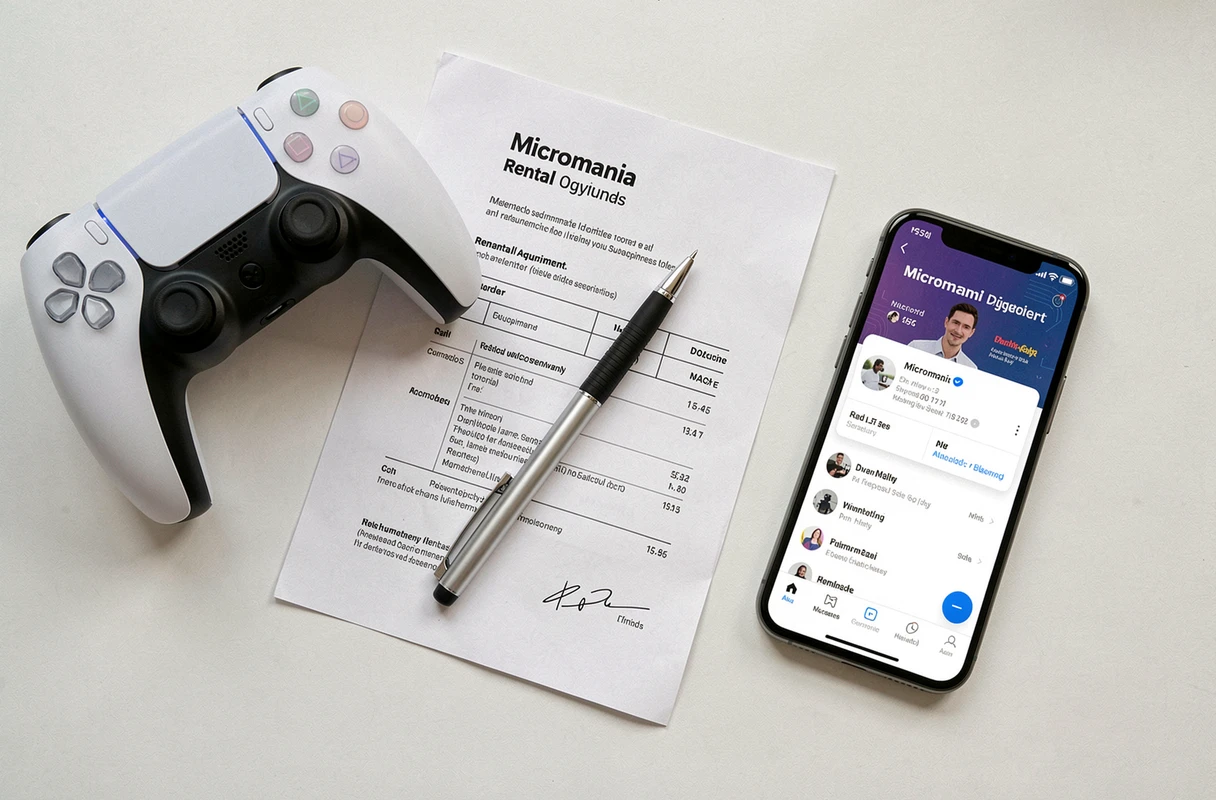
Player profile and relevance of PS5 rental
The Micromania LLD targets a specific profile: the player who renews their console with each generation and prefers to smooth out the expense over monthly payments rather than pay the full price in one go. For this profile, the overall extra cost is the price of cash flow comfort.
For a player who keeps their console for five years or more, buying remains more advantageous financially. The purchased console retains a resale value, even modest, and imposes no return constraints.
- “Frequent renewal” profile: rental smooths the cost and simplifies the transition to the next generation, provided one accepts the accumulated extra cost
- “Long-term player” profile: buying new or second-hand remains the most economical solution, especially with occasional trade-in operations
- “Discovery or gift” profile: rental can serve as a real-world test, but the minimum commitment duration limits this use
The gradual shift of PlayStation towards an all-digital model does not render rental obsolete, but modifies its value proposition. The rental package now sells hardware more than access to a physical ecosystem. The relevance of the model will depend on Micromania’s ability to integrate digital services (PlayStation Plus subscriptions, store credits) into its future rental offers.
The Micromania LLD contract remains a financial tool, not a technological advantage. As long as the pricing structure does not include a software component, the comparison with direct purchase leans in favor of the latter for the majority of player profiles.