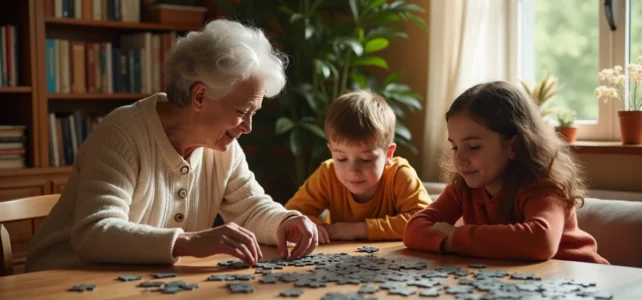
A rainy Sunday, three children of different ages, and nothing planned. We all know this situation. The reflex is to look for an activity that suits everyone, and we often end up resorting to a screen. However, there are hobbies that really work for multiple age groups at the same time, without requiring an extravagant budget or seminar-level logistics.
Nature disconnection activities: a game changer trend
For a few years now, leisure activities focused on digital disconnection have taken a concrete place in the French offering. We’re not talking about an abstract concept: regional natural parks now offer guided forest bathing, smartphone-free stays, and unusual accommodations (yurts, cabins, tiny houses) designed to welcome families with children of all ages.
What works on the ground is simplicity. A weekend in a cabin in a regional park doesn’t require booking six months in advance or specific equipment. You arrive, turn off your phone, and the children rediscover basic sensations: walking barefoot, observing insects, building a shelter with branches.
For those looking to explore leisure activities on Votre Journal, this type of experience is among the formats gaining the most popularity, far beyond the traditional “nature” audience.
Slow tourism, in practice, is particularly suitable for multigenerational groups. Grandparents appreciate the calm pace, teenagers discover they can survive without a signal, and younger ones invent games with what they find. Feedback on this point varies among families, but the format is widely appealing.

Outdoor escape games: scavenger hunts suitable for all ages
Escape games are no longer limited to closed rooms in city centers. Urban and rural scavenger hunts designed to mix generations, including seniors, are emerging. The principle: an investigation to solve while walking through a neighborhood or village, with puzzles calibrated at multiple difficulty levels.
The concrete benefit is that each participant contributes according to their abilities. A six-year-old spots a visual clue, a teenager deciphers a code, and an adult connects the dots between the steps. No one is left sitting on the sidelines waiting.
What distinguishes a good family scavenger hunt
- Puzzles that can be adjusted with at least two levels of difficulty, so that both younger children and adults have their roles
- An outdoor route limited to a reasonable distance, accessible with a stroller or for people with reduced mobility
- A scenario based on the real location (local history, architecture, heritage) rather than a generic theme applied to any city
These formats can be found in an increasing number of municipalities, often supported by local tourist offices or associations. The cost remains modest compared to an amusement park, and the duration generally lasts around one to two hours.
Creative hobbies at home: moving beyond ready-made kits
Painting, salt dough, DIY with recycled objects: these activities remain among the most effective for keeping children of varying ages occupied. They tend to be underestimated because they seem mundane.
The trap is the ready-to-use kit sold in supermarkets. It’s expensive, limits creativity to a predefined model, and generates plastic waste. The best creative hobbies start from materials already available at home: toilet paper rolls, empty cans, fabric scraps, packaging cardboard.
Three formats that work regardless of age
A “chamboule-tout” made with decorated cans takes twenty minutes to prepare and entertains both a four-year-old and a competitive adult. A collective mural on a large cardboard laid on the ground allows everyone to paint their area without conflict. A cooking workshop (cookies, homemade pizza) turns meal preparation into a shared activity.
The common point: no additional purchases necessary. You use what you have, adapt the complexity on the fly, and the result matters less than the time spent together.

Activities with friends and family: choosing based on real constraints
When organizing an afternoon for a mixed group (children, parents, friends without children), the real selection criterion is not the theme of the activity. It’s the dominant logistical constraint.
- If the group includes children under three years old, prioritize a closed and secure location: indoor park, private garden, multipurpose room
- If everyone is over six years old, water activities (swimming in a river, canoeing, fishing) offer common ground where everyone finds their pace
- If the budget is tight, public parks with playgrounds remain the most cost-effective format: free, accessible, and children self-organize while adults chat
- If you have a car and half a day, a short hike with a picnic works for practically all family configurations
A common mistake is wanting one activity that pleases everyone. In practice, the best moments occur when two or three simultaneous options are offered in the same place: some play ball, others read, and children climb trees.
Rather than searching for the perfect activity, it’s better to choose a setting open enough for everyone to find their enjoyment. A park by the river, an educational farm with a picnic area, or even a large garden equipped with a hammock and a ball is enough to meet very different expectations without frustration or excessive organization.