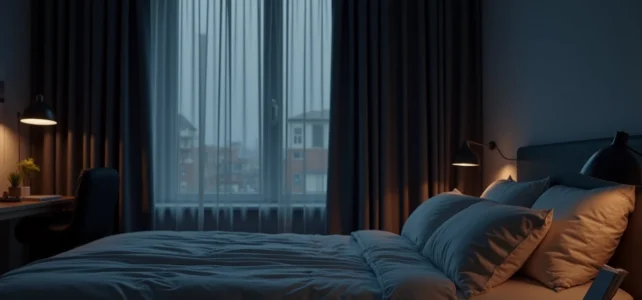
Blocking the light from a window for better sleep relies on a choice between several solutions, the effectiveness of which varies depending on the type of window, budget, and the level of darkness sought. The table below compares the main blackout options based on three measurable criteria: ability to block light, associated thermal insulation, and ease of installation.
| Solution | Light Blocking | Thermal Insulation | Installation Without Drilling |
|---|---|---|---|
| Blackout Curtain | Very High | Medium to Good | Possible (pressure rod) |
| Blackout Roller Blind | Very High | Low | Possible depending on model |
| Opaque Window Film | High | Low | Yes |
| Roller Shutter | Total | Good | No (requires work) |
| Blackout Pleated Blind | High | Low to Medium | Yes |
| Double Layer System | Modulable | Good | Possible |
| Sleep Mask | Total (over the eyes) | None | Not applicable |
Several of these tips for blocking light from a window can be combined to achieve near-total darkness, especially when a single light leak is enough to disrupt sleep.
1. Blackout Curtain with Thermal Lining
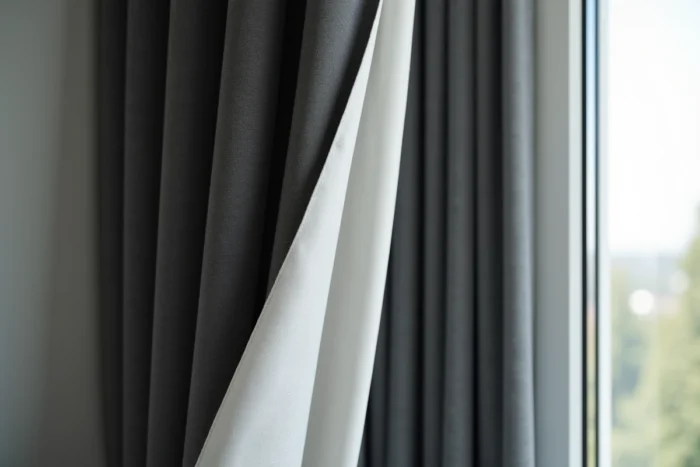
The blackout curtain remains the most common solution for blocking light from a window. Its effectiveness primarily depends on the fabric density: a sufficiently dense weight stops almost all rays.
Models with thermal lining add a layer of temperature regulation. In summer, they limit incoming heat. In winter, they reduce heat loss through the glazing.
The classic weak point: light that filters in from the sides and above the rod. To remedy this, choose a curtain wider than the window and a rod fixed to the ceiling or very high on the wall.
2. Precisely Fitted Blackout Roller Blind
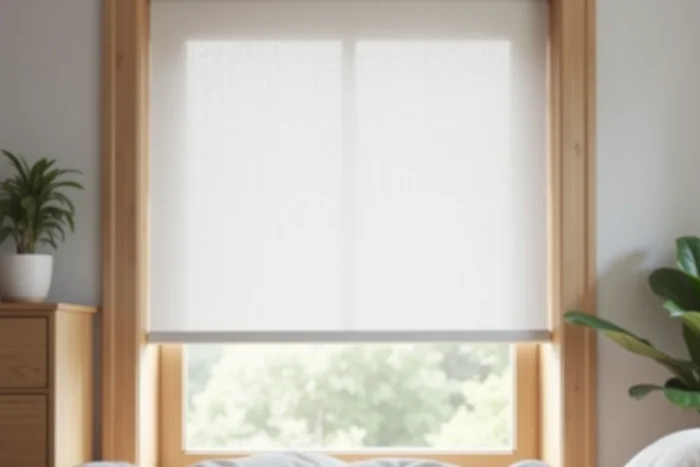
The blackout roller blind stands out for its compactness. Recessed in the reveal or fixed to the frame, it leaves little lateral light leakage when measured to fit.
The measurement is the determining factor. A gap of a few millimeters between the blind and the frame creates a visible stream of light in the dark. Models with side tracks eliminate this problem.
3. Opaque Film or Heat-Blocking Film on Glazing
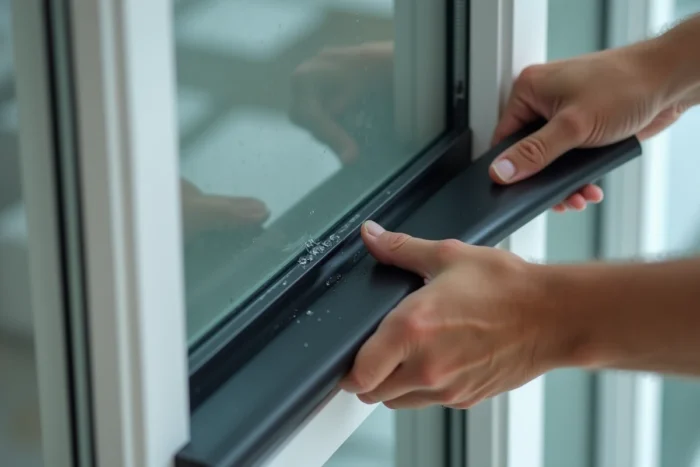
The opaque film adheres directly to the glass and blocks light without altering the exterior appearance of the window. It is a suitable option for renters who cannot install shutters.
For roof windows like Velux, specialists now compare heat-blocking film, blackout blinds, and solar roller shutters. Films applied externally reduce both light and nighttime overheating, while blackout blinds alone allow the glass to heat up and radiate heat at night.
4. Roller Shutter for Total Blackout
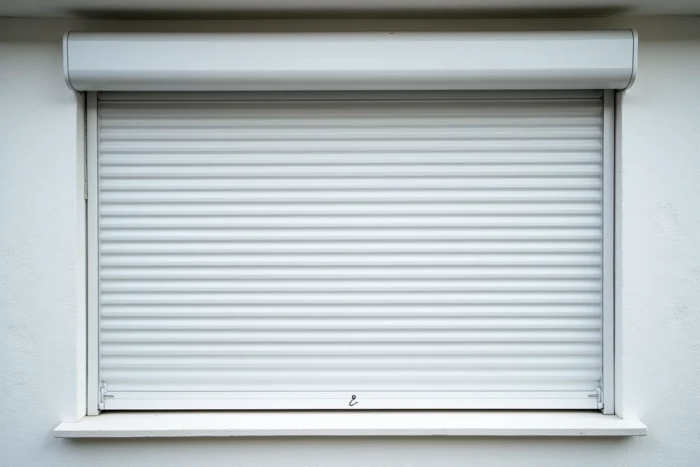
The roller shutter offers the highest level of blackout. The aluminum or PVC slat creates a complete physical barrier in front of the glazing, with no gaps when the curtain descends to the bottom.
Thermal insulation is a significant collateral advantage: the air gap between the shutter and the glass acts as a buffer. However, installation requires work, which excludes this option for many renters.
Note: Article R.1331-35 of the Public Health Code mandates a blackout device in rooms intended for sleep. A rented property without shutters or an equivalent solution in the bedroom may be considered unfit for habitation due to recent regulatory changes.
5. No-Drill Blackout Pleated Blind
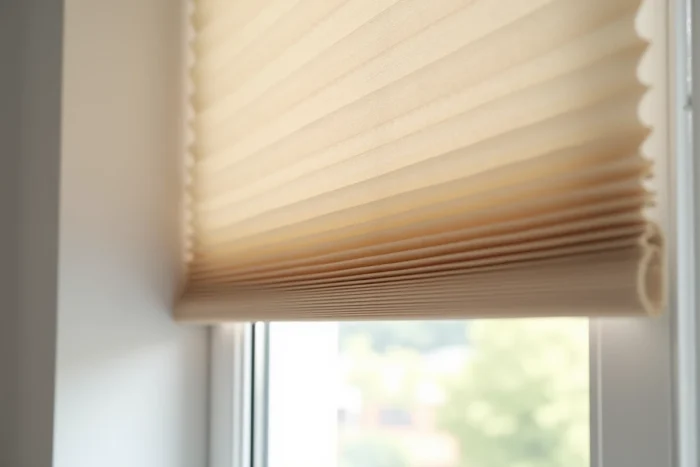
The blackout pleated blind attaches directly to the window frame, often with clips or adhesive tape. It can be cut to the desired dimensions, making it accessible without tools.
This solution is suitable for small windows or temporary rooms (student housing, subletting). The darkness achieved is slightly less than that of a roller blind with side tracks, as the folds of the fabric sometimes allow a strip of light to filter in at the edges.
6. Double Layer System: Sheer Plus Dense Panel
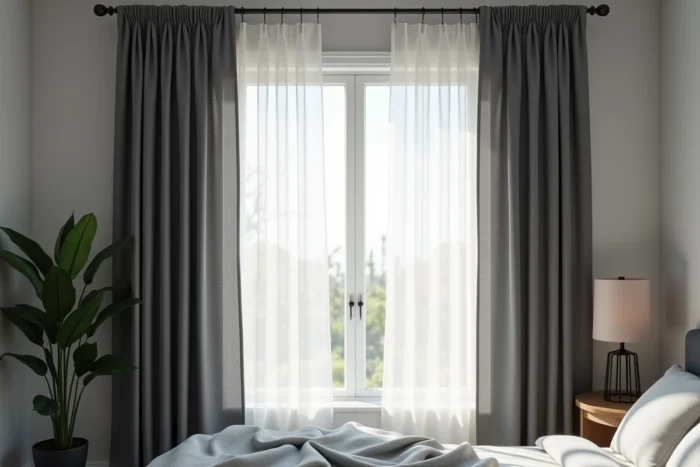
The recent trend is to replace the 100% blackout curtain with a modulable double layer system: a sheer linen or cotton fabric during the day, combined with a denser panel or thermal curtain at night.
This setup allows for natural light control without living in darkness all the time. Aesthetic appeal also improves, as natural fabrics integrate better into minimalist interiors than the plastic-lined linings of traditional blackout curtains.
7. Seals and Draft Stoppers to Block Light Leaks
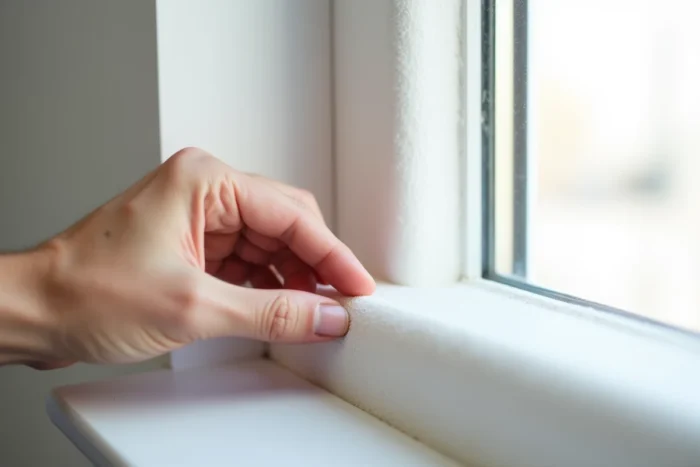
A blackout curtain loses much of its effectiveness if light enters through the bottom of the door or the gaps in the window frame. Adhesive foam or silicone seals, applied to the frame, eliminate these leaks.
The door draft stopper, often overlooked, blocks light from the hallway or landing. In an apartment where the lighting in common areas stays on at night, this simple measure makes a noticeable difference in sleep quality.
8. Solar Roller Shutter for Velux Roof Window
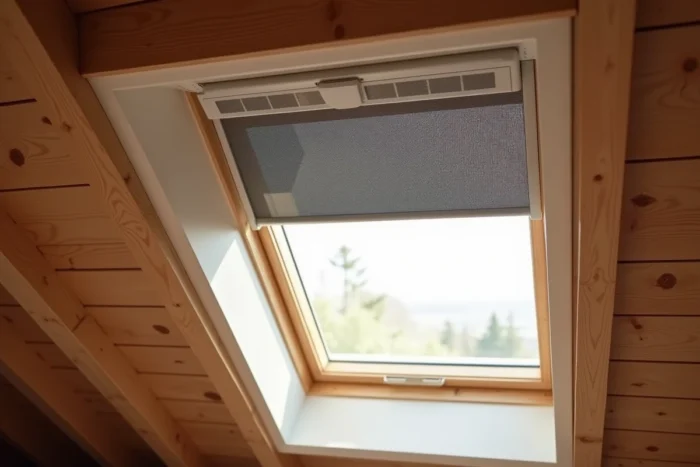
Roof windows pose a specific problem: their angle amplifies the entry of light and heat. A simple internal blackout blind blocks light but the glass continues to heat up and radiate heat at night.
The solar roller shutter, powered by a small integrated photovoltaic panel, combines total blackout with exterior insulation. It can be installed without dedicated electrical power, simplifying installation on existing roofs.
9. High-Density Sleep Mask
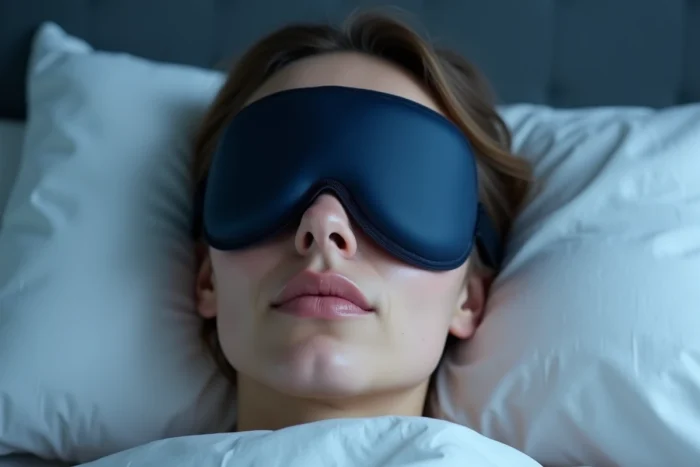
The sleep mask does not alter the window but blocks all light perceived by the eyes. It is the only portable solution, useful when traveling or as a complement to an imperfect device.
The effectiveness of a mask depends on its shape: molded models with eye cavities avoid pressure on the eyelids and limit light leaks at the nose. A classic flat mask often allows a stream of light to pass through at the bottom.
10. Elimination of Indoor Light Sources
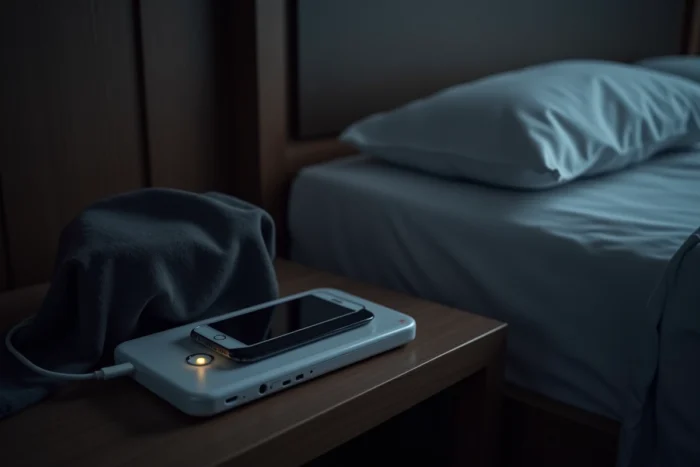
Even with a perfectly blacked-out window, the standby LEDs of electronic devices (charger, internet box, alarm clock) are enough to maintain a level of brightness that interferes with melatonin production.
Unplugging or turning off these devices eliminates the problem at the source. For LEDs that cannot be removed, a simple piece of opaque tape is sufficient. This measure, combined with good window blackout, allows for a level of darkness close to total black without additional investment.
Most bedrooms accumulate several sources of stray light. Treating only the window is not enough if the bottom of the door, standby LEDs, or gaps in the frame remain open. Combining two or three solutions from those listed here produces a more effective result than a single high-end device poorly installed.